
In the clinical, tungsten-lit halls of Nathan’s research facility, every frame is an exercise in tension and psychological control. This study explores the striking visual duality of Ex Machina's corridor sequences, analyzing the transition from the modern, antiseptic "normal" state to the high-contrast, atmospheric "red-out" during power failures.
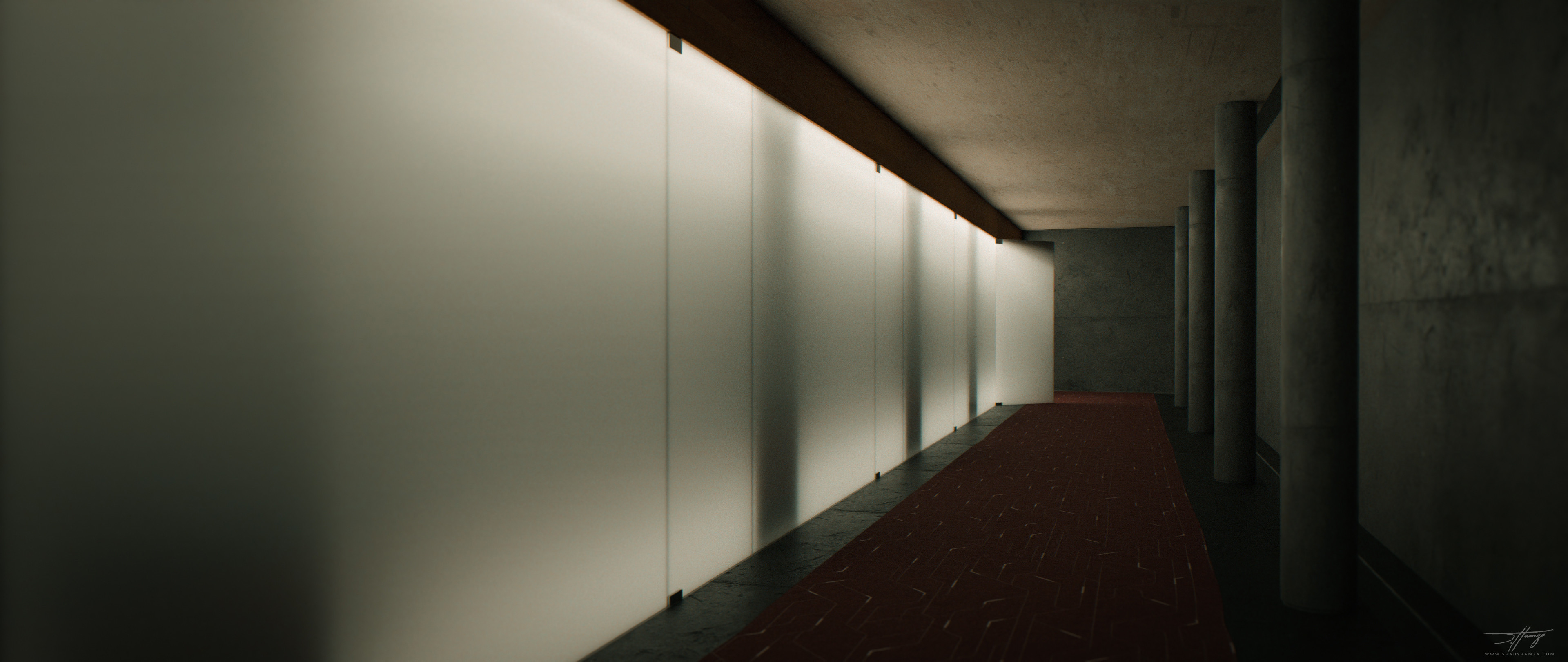
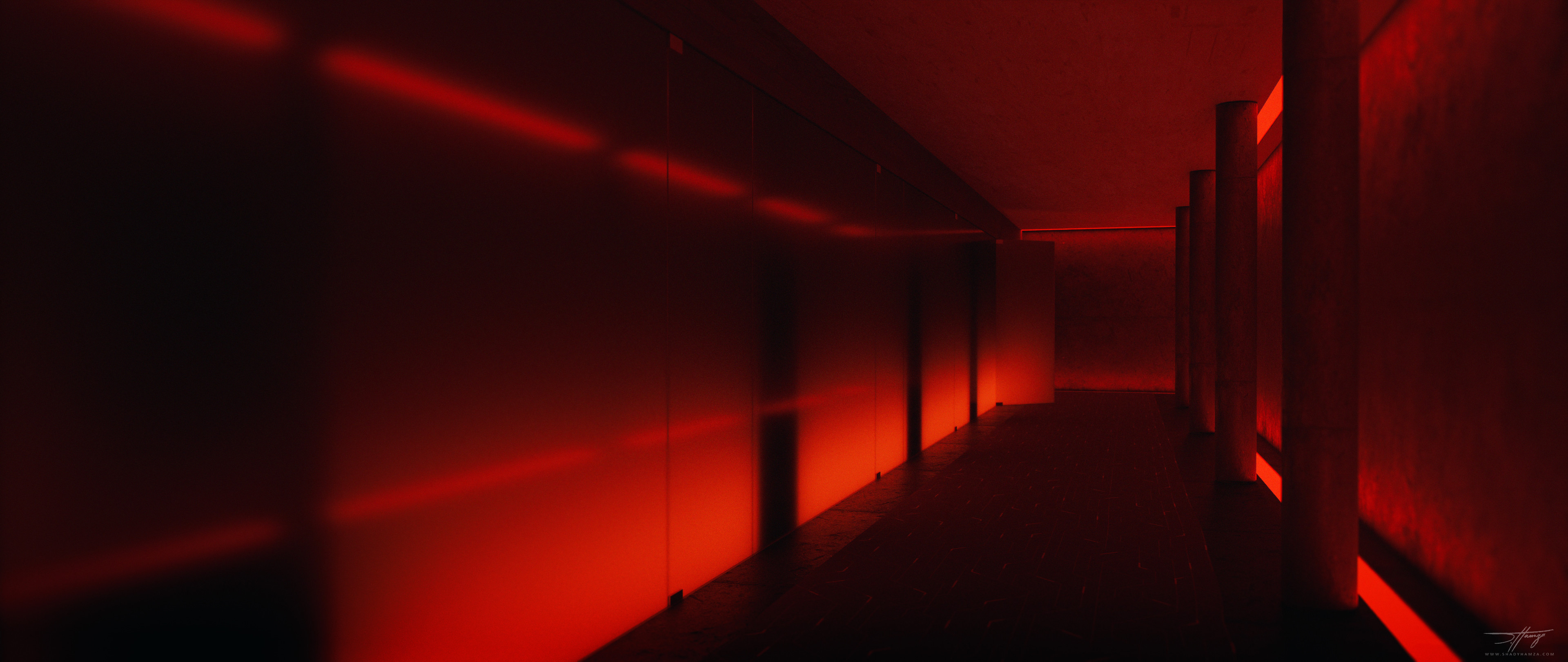
Lighting Scenarios: A breakdown of the shift between soft, diffused tungsten practicals and the visceral, monochromatic red emergency lighting that signals a break in control and the emergence of truth.
Camera Framing: An analysis of Rob Hardy’s use of "imperceptibles", slow, creeping forward motions, and architectural perspective lines to trap the subject and viewer within the environment.
Technical Breakdown & Workflow
This study focuses on replicating the clinical yet high-tension atmosphere of Alex Garland's Ex Machina, utilizing a hybrid 3D and 2D pipeline to capture the film's unique visual language.
1. Environment & Lighting (Blender)
- Corridor Normal State: The primary challenge was replicating the soft, diffused tungsten practicals. I utilized a Translucent Shader for the glass panels to accurately catch and scatter light, mimicking the gaffer's use of reflective panels to mask camera reflections while maintaining a bright, consistent look.
- The "Red-Out" Power Cut: To achieve the visceral, monochromatic emergency lighting, I swapped to high-intensity Emmissive Shaders. This transition shifts the mood from "clinical truth" to "conflict and revelation," mirroring the film's use of red to signal a break in Nathan’s control.
2. Cinematography & Framing
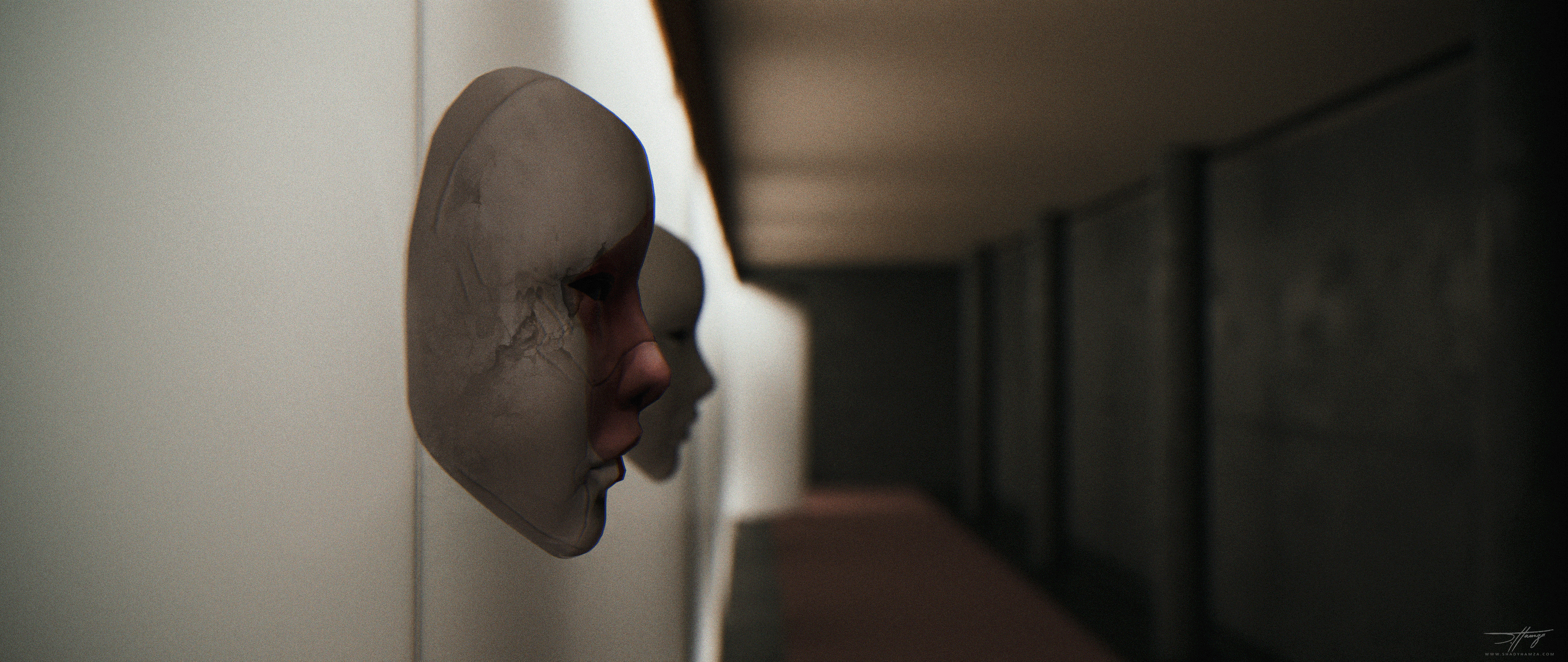
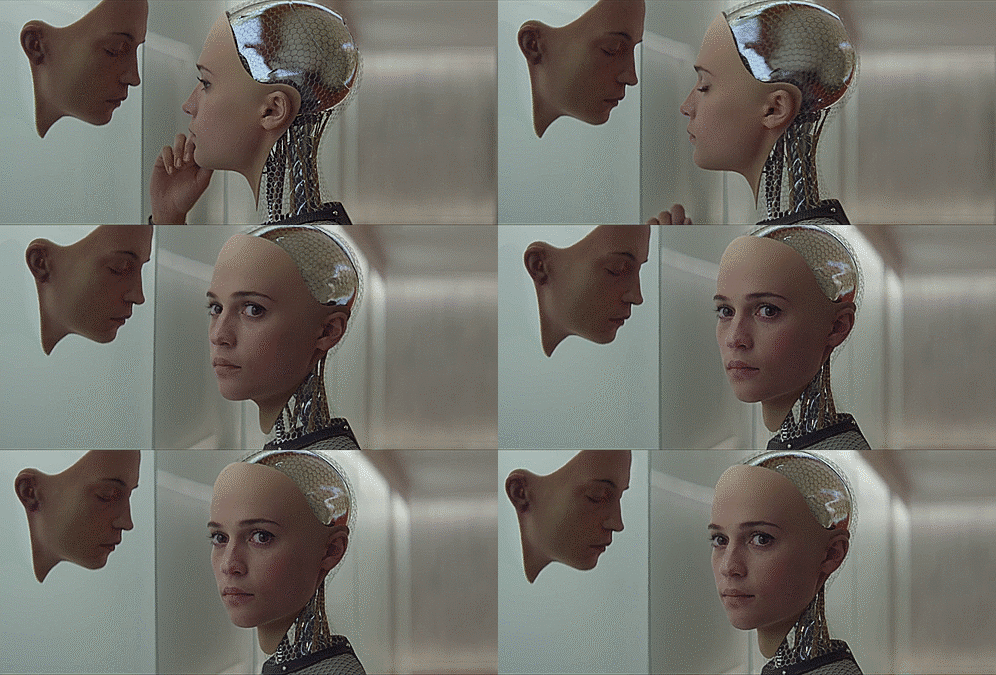
- The Mask Scene (Macro Study): This shot utilizes a Closeup Lens to focus on the intricate detail of the decommissioned AI masks. By narrowing the depth of field, the framing emphasizes the unsettling "uncanny valley" effect of Nathan’s previous prototypes.
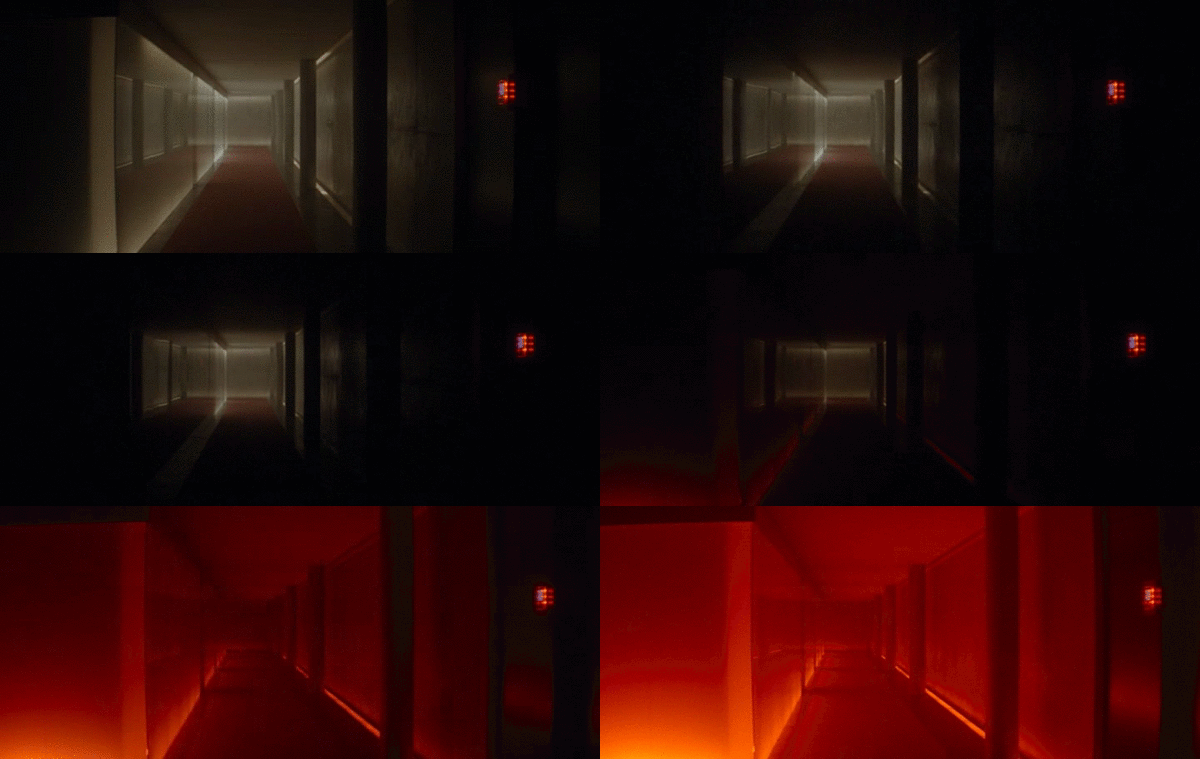
- Architectural Perspective: Corridor scenes were framed to exploit strong perspective lines, a technique used by cinematographer Rob Hardy to visually "trap" characters within the facility’s architecture.
3. Post-Processing & Color Grading (Photoshop)
- Final Grade: The raw Blender renders were brought into Photoshop for final color balancing. I focused on the contrast between the sterile, "angelic" whites of the standard lighting and the deep, saturated reds of the power failure to heighten the psychological tension.
- Atmospheric Effects: Soft glows were added to simulate the photographic style of Saul Leiter, which heavily influenced the film’s soft, glass-manipulated glows.