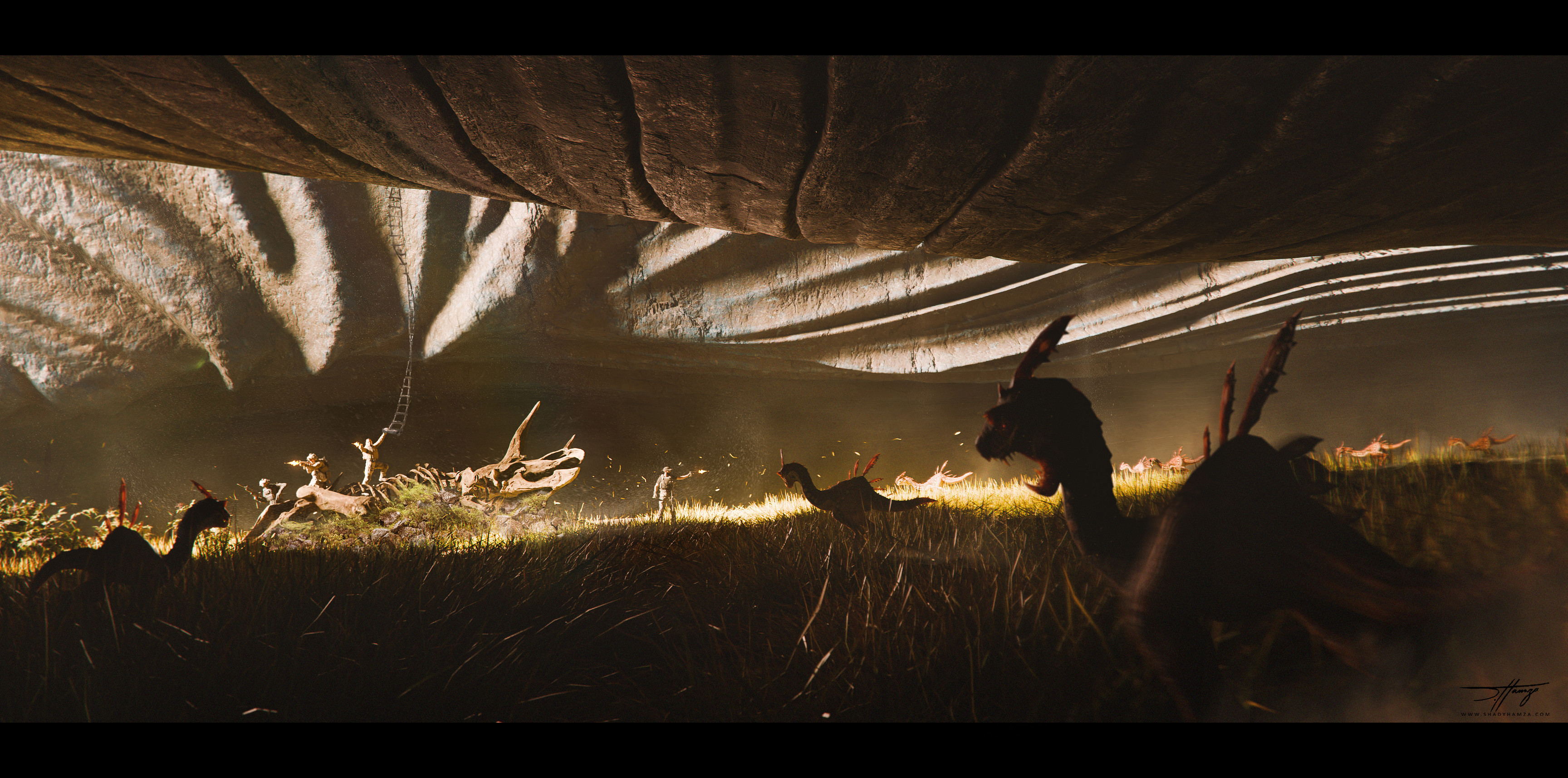
This keyframe illustration captures a high-intensity extraction scenario where a squad of futuristic marines is forced into a desperate retreat under a relentless raptor assault. At the heart of the scene lies a defining moment: one marine makes the conscious decision to stay behind, holding the line so the rest of the team can escape.
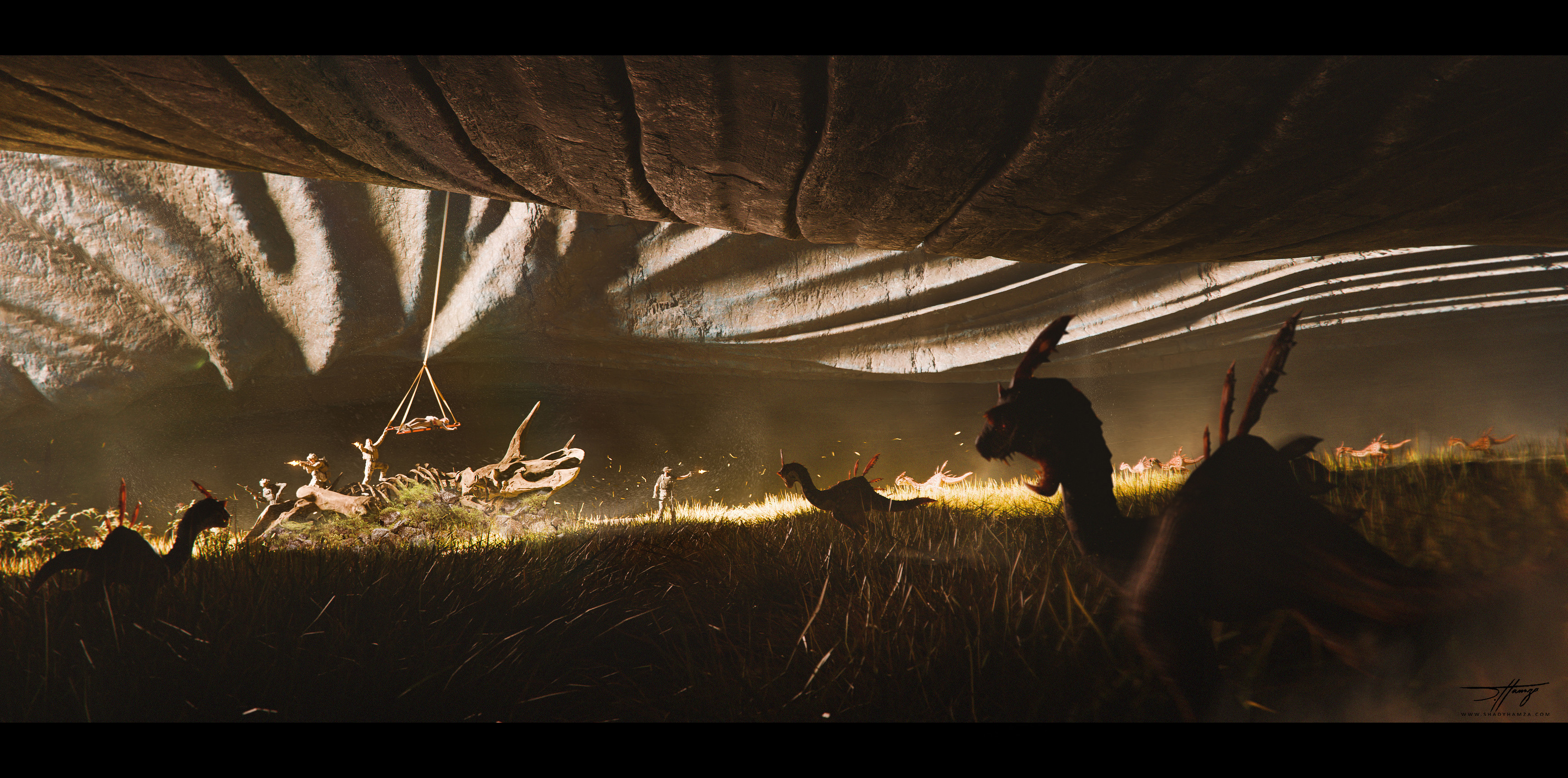

As a swarm of raptor-like dinosaurs breaches the perimeter, the squad splits between survival and duty. A critically injured scientist is lifted away on a stretcher beneath a hovering helicopter, while the remaining marines fall back, except for one.
The goal of this piece is to portray not just action, but sacrifice, timing, and irreversible choice, all frozen within a single cinematic frame.
🔻 Process Breakdown
1. Ideation & Thumbnails
The process began with quick thumbnail sketches to explore composition, scale, and storytelling clarity. The main objective at this stage was to establish a strong narrative read at a small size.
- Focused on multiple camera angles (low angle for heroism vs eye-level for immersion)
- Explored grouping vs separation to highlight the sacrificing marine
- Tested raptor flow and directional movement toward the focal point
At this stage, readability was prioritized over detail—ensuring the viewer could immediately understand:
who is escaping, who is staying, and where the danger is coming from
2. Storyboarding
Once a strong thumbnail was selected, I developed more refined storyboard sketches to lock in the storytelling beats.
Key decisions:
- Positioned the sacrificing marine at a visual choke point
- Established opposing movement directions (escape vs defense)
- Framed the helicopter Indication and stretcher as a secondary focal point
This phase ensured the image communicates a clear moment in time, not just a generic action scene.
3. 3D Blockout (Blender)
I used Blender to build a rough 3D blockout of the scene to solve:
- Camera perspective and lens choice
- Character placement and scale relationships
- Lighting direction and shadow behavior
Simple geometry and placeholder rigs were used to quickly iterate on composition.
This step was crucial for achieving a cinematic and believable spatial setup.
4. Asset Creation (ZBrush)
Custom terrain and rock formations were sculpted in ZBrush to support the composition.
- Designed rocks to act as natural framing elements
- Used shapes to guide the viewer’s eye through the scene
The environment was treated as a storytelling tool, not just background detail.
5. Base Render (Blender)
After refining the blockout, I developed a more detailed scene for final rendering.
-
Used light and shadow to help guide the eye to the focal point
- Rendered passes for flexibility (lighting, depth, masks)
- Ensured silhouettes remained clear under final lighting conditions
The render served as a strong foundation for the final paint-over.
6. Photobash & Paintover (Photoshop)
Photoshop was used to push the image to final quality.
- Integrated photo textures for realism and detail
- Enhanced lighting, atmosphere, and depth
- Added effects such as dust, motion blur, muzzle flashes, and debris
7. Final Polish
The last stage focused on unifying the image:
- Color grading for cinematic tone
- Atmospheric perspective to enhance depth
- Edge control and detail refinement
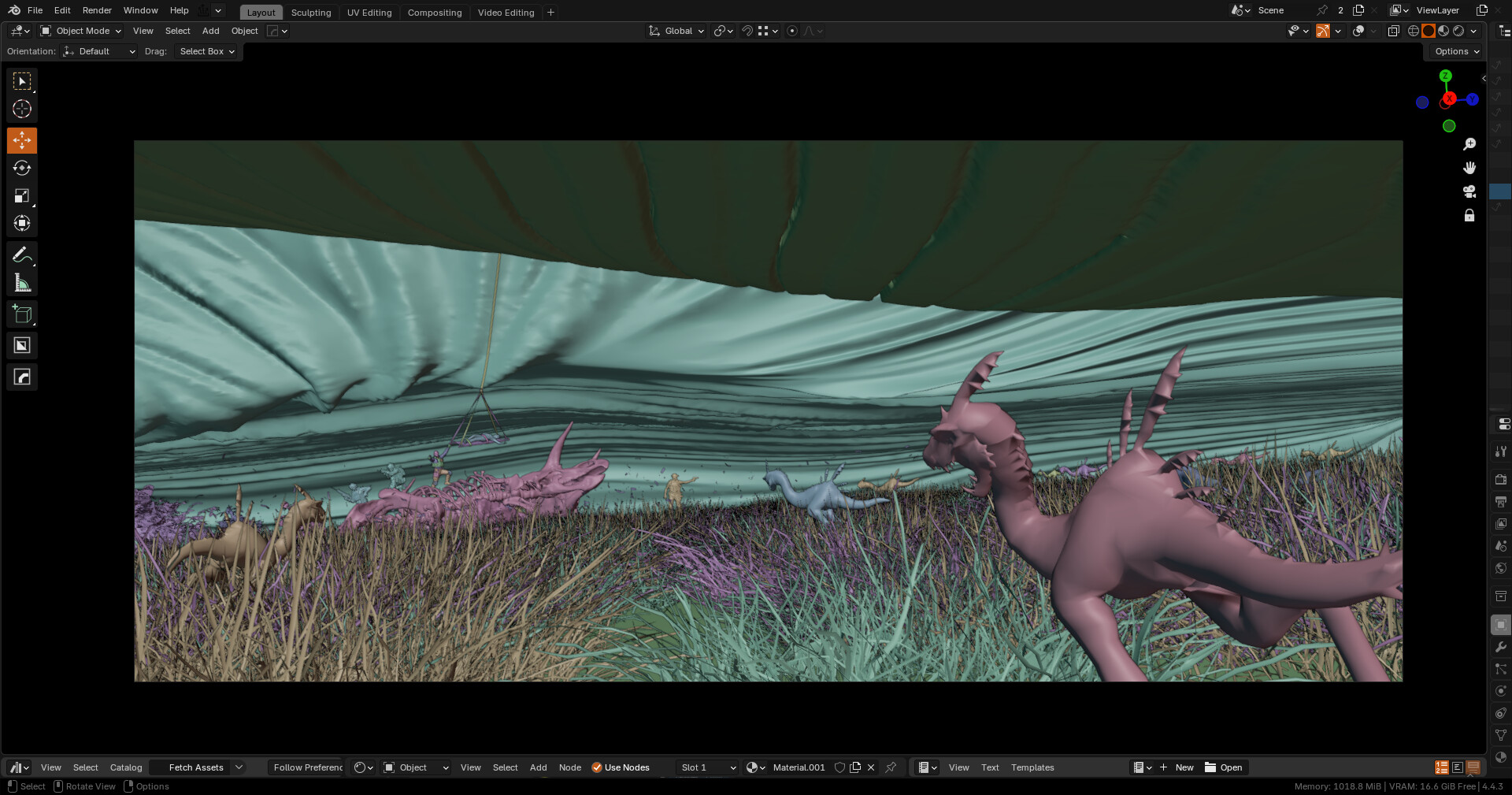
An alternate composition using a rope-ladder extraction. The focal point is kept subtle through value control and composition, encouraging a slower read of the marine’s sacrifice.