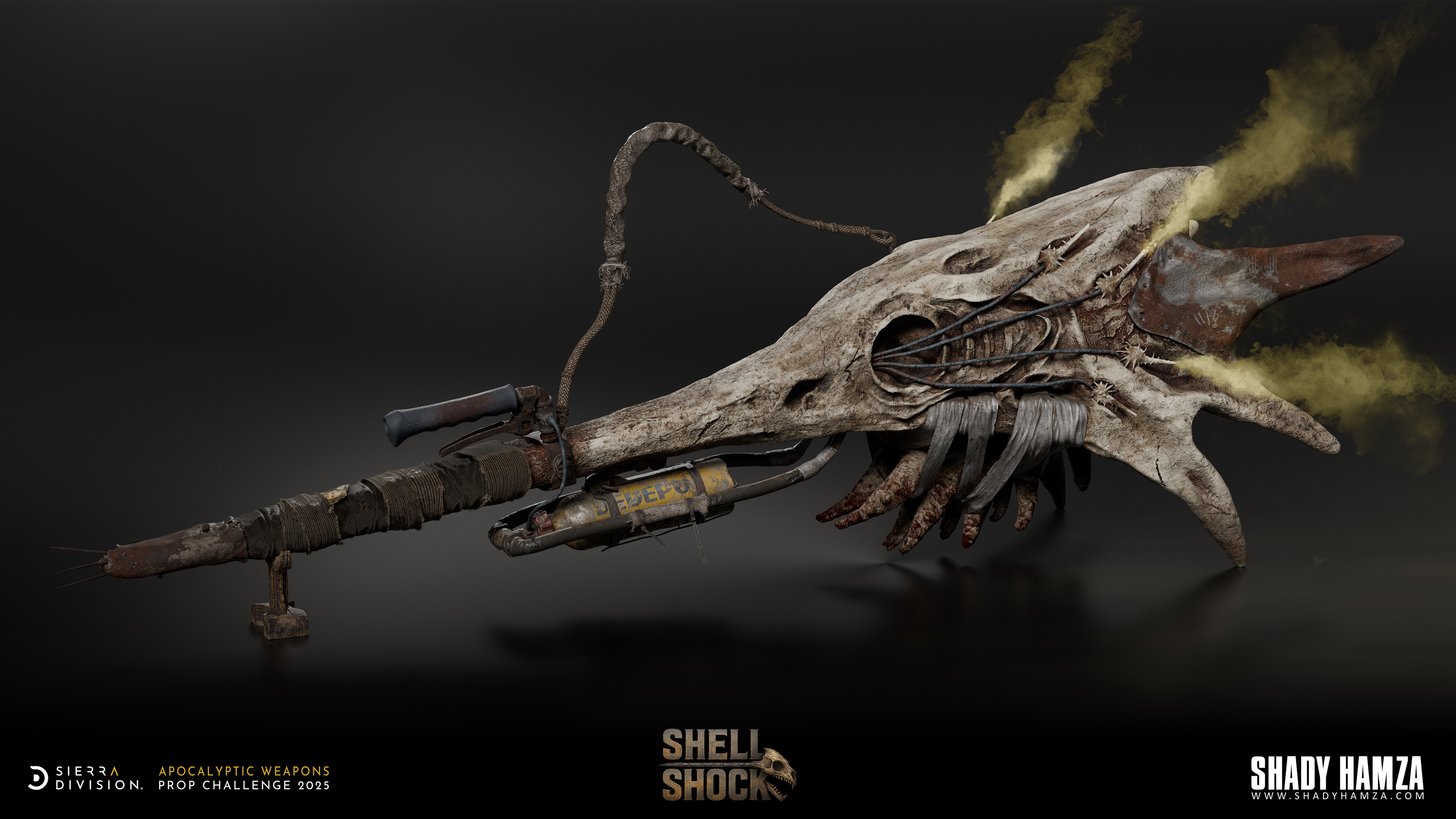
My submission for this challenge was awarded 1st place, and this page is a complete breakdown of that project, from early ideation and reference gathering to final presentation. I’ll walk through the decisions, techniques, and challenges behind the piece, sharing both the creative direction and the technical process that shaped the final result.
Design Inspiration:
Fish Skulls: These will represent the harshness of survival and death in the WaterWorld. They will form the central structure of the weapon, with jagged edges, sharp features, and an almost skeletal appearance, embodying the remains of those who couldn’t survive the harsh environment. Seashells: Used as decorative, yet functional pieces. They will serve as both protective elements and deadly edges. Their natural sharpness could symbolize the dangerous beauty of the ocean. They might be attached to the weapon as projectiles or as decorative armor that enhances its combat utility. Natural Materials: I envision the weapon being created from what’s left after the floodwaters took everything—rusted metal, barnacle-encrusted blades, and driftwood are likely materials that will make up the rest of the structure. The weapon will feel like it has a history, made from the remains of a world that’s already been lost.
Next Steps: The next phase is all about gathering references. I need to fully immerse myself in the world I’m building and find inspiration that aligns with the WaterWorld apocalypse theme. I’ll be collecting images of fish skulls, seashells, barnacles, and any marine life that might inform the structure and look of the weapon. Along with these, I’ll search for references of post-apocalyptic weaponry and environments looking at scavenged materials, rusted metal, and natural textures that have been worn down by saltwater and time.
This research phase will not only help me understand the anatomy and characteristics of marine life but also give me a solid foundation for textures and materials. I’ll need to make sure the weapon has that raw, lived-in look, like something crafted from the remnants of a drowned world.
Log 01: The Concept - Apocalyptic WaterWorld
Introduction to the Idea: Welcome to my first log for the Sierra Division Apocalyptic Weapons Challenge. The theme I’ve chosen is Apocalyptic WaterWorld, a world submerged in chaos, ruled by water and scavengers. The idea is to create a weapon that reflects the harrowing, survivalist mentality of this world, where resources are scarce and the ocean has become both an ally and a deadly foe. To capture the essence of this environment, I’m incorporating elements of marine life, specifically fish skulls and seashells, into the design. These are elements that speak to the brutality of the world and the desperation of those who fight for survival.
Log 02: The Next Step - Gathering References
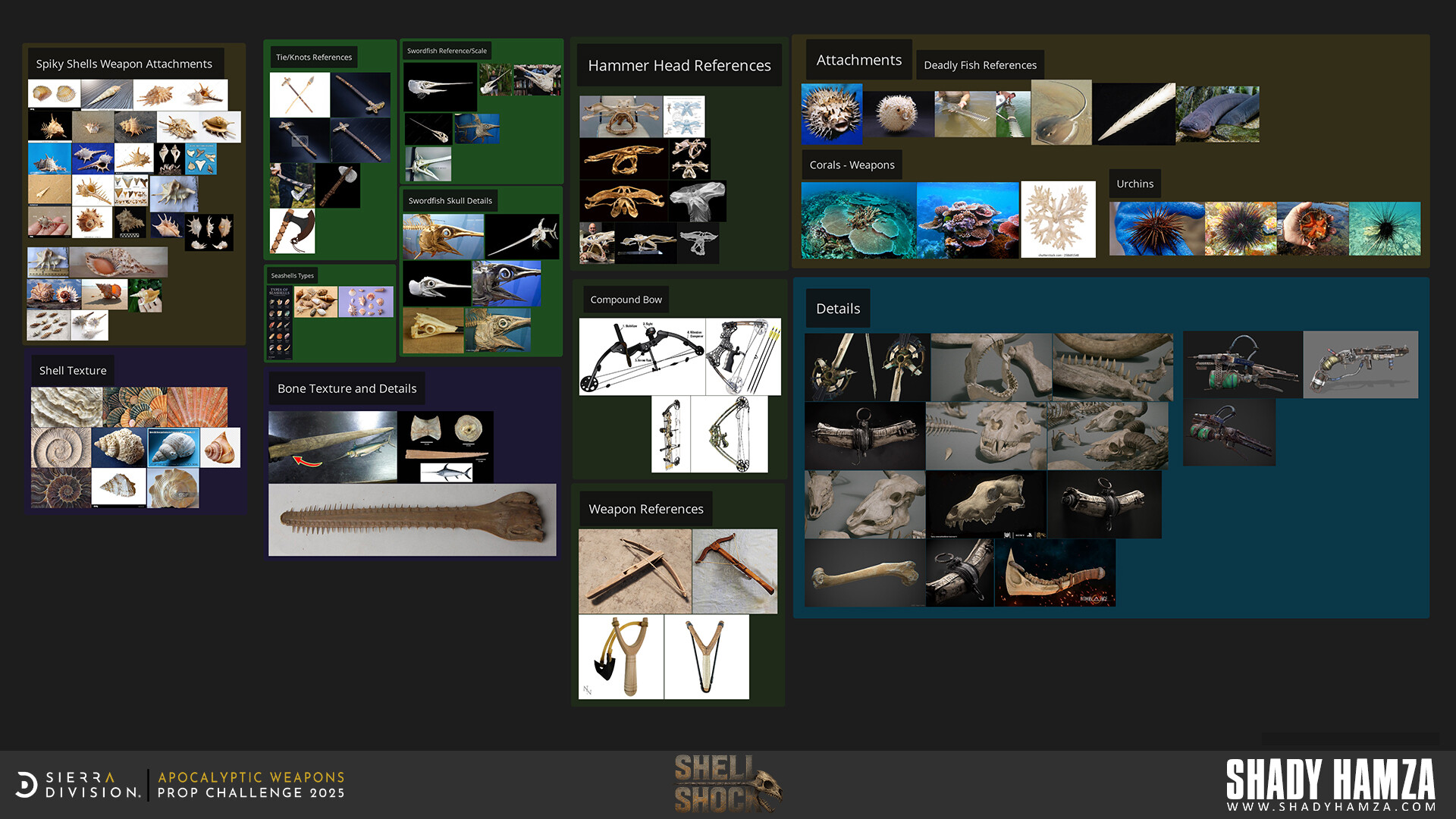
Introduction to the Process: In this second log, I’m diving into the essential phase of gathering references for my apocalyptic WaterWorld weapon design. This step is crucial because it helps solidify the concept and guides the 3D modeling process. To create something as unique and immersive as this weapon, I need to collect visual references that will inspire and inform every detail from the textures and shapes to the overall atmosphere of the design.
Why References Matter: References allow me to create a more grounded and believable weapon. I’m not just pulling ideas from thin air; I’m diving into the real-world nature, ancient weaponry, marine life, and post-apocalyptic aesthetics to create something that feels both organic and functional. For a weapon based in a WaterWorld, I’ll need references that show how marine elements like fish skulls, seashells, and barnacles can be repurposed into deadly implements.
Categories of References:
Fish Skulls and Marine Life: I’ll start by gathering various images of fish skulls, focusing on their shapes, structures, and how they can be used as the central feature of the weapon. I’ll look at the anatomy of different fish, from sharp-toothed predators like sharks to the more fragile structures of smaller fish. This will help me understand how to manipulate their forms to create something both menacing and functional. References from documentaries, marine biology books, and even high-resolution photography will be key here.
Seashells and Oceanic Textures: Next, I’ll search for references of seashells focusing on the sharpness and intricacies of different types of shells, like conchs, razor clams, or even barnacles. Some shells will serve as functional elements (like sharp edges for cutting or projectile parts), while others will enhance the weapon’s aesthetic with their organic forms. I’ll also pull in references for how shells interact with natural textures barnacles on rocks, the wear of saltwater on objects, and coral formations. These will help me understand how to blend organic elements into the weapon’s design while maintaining a post-apocalyptic feel.
Post-Apocalyptic Weaponry: I’ll be looking at other post-apocalyptic weapon designs to study how scavenged and makeshift weapons are put together. Think about things like rusted metal, driftwood, sharp bones, and roughhewn stone. I want my weapon to look like something created from the wreckage of the old world used and weathered but still deadly. Films like Mad Max and WaterWorld (of course!) will provide plenty of inspiration, but I’ll also look at concept art, survival gear, and DIY weaponry designs online to get a broader sense of how these elements are blended into functional tools of destruction.
Textures and Materials: Finally, I need references for materials like rusted metal, aged leather, barnacles, and seaweed. These textures will need to be incorporated into the 3D model to make the weapon look like it’s been exposed to saltwater, storms, and constant battle. Textures from real-world examples of driftwood and corroded metal will be incredibly useful to bring that gritty, lived-in look to the weapon.
Next Steps: Once I’ve collected all my references, I’ll start creating the initial sketches and rough 3D models. The references will be my guide to make sure every detail stays true to the theme and feels integrated into this apocalyptic WaterWorld.
Log 03: Back Story & Initial Sketches - ShellShock
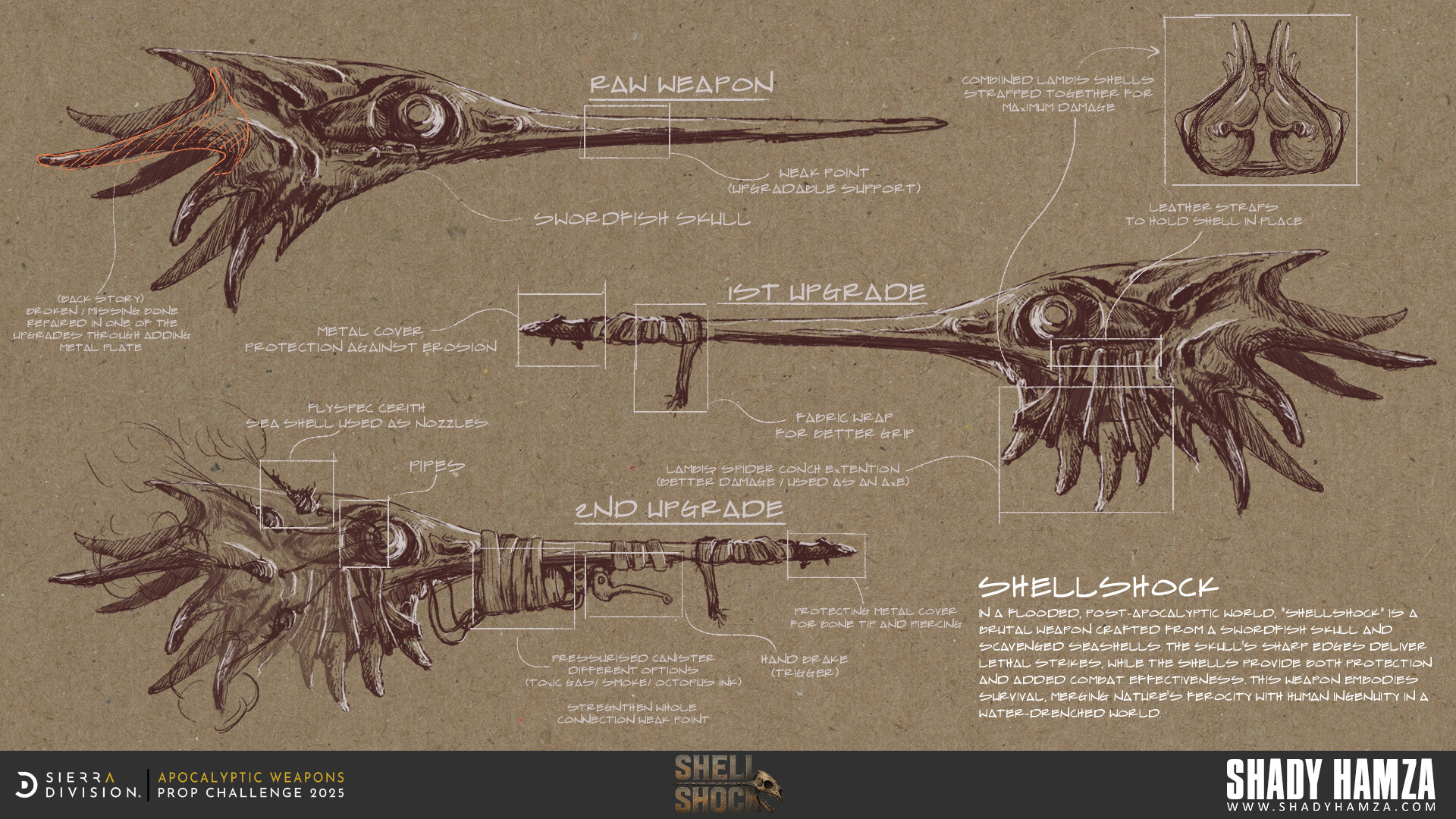
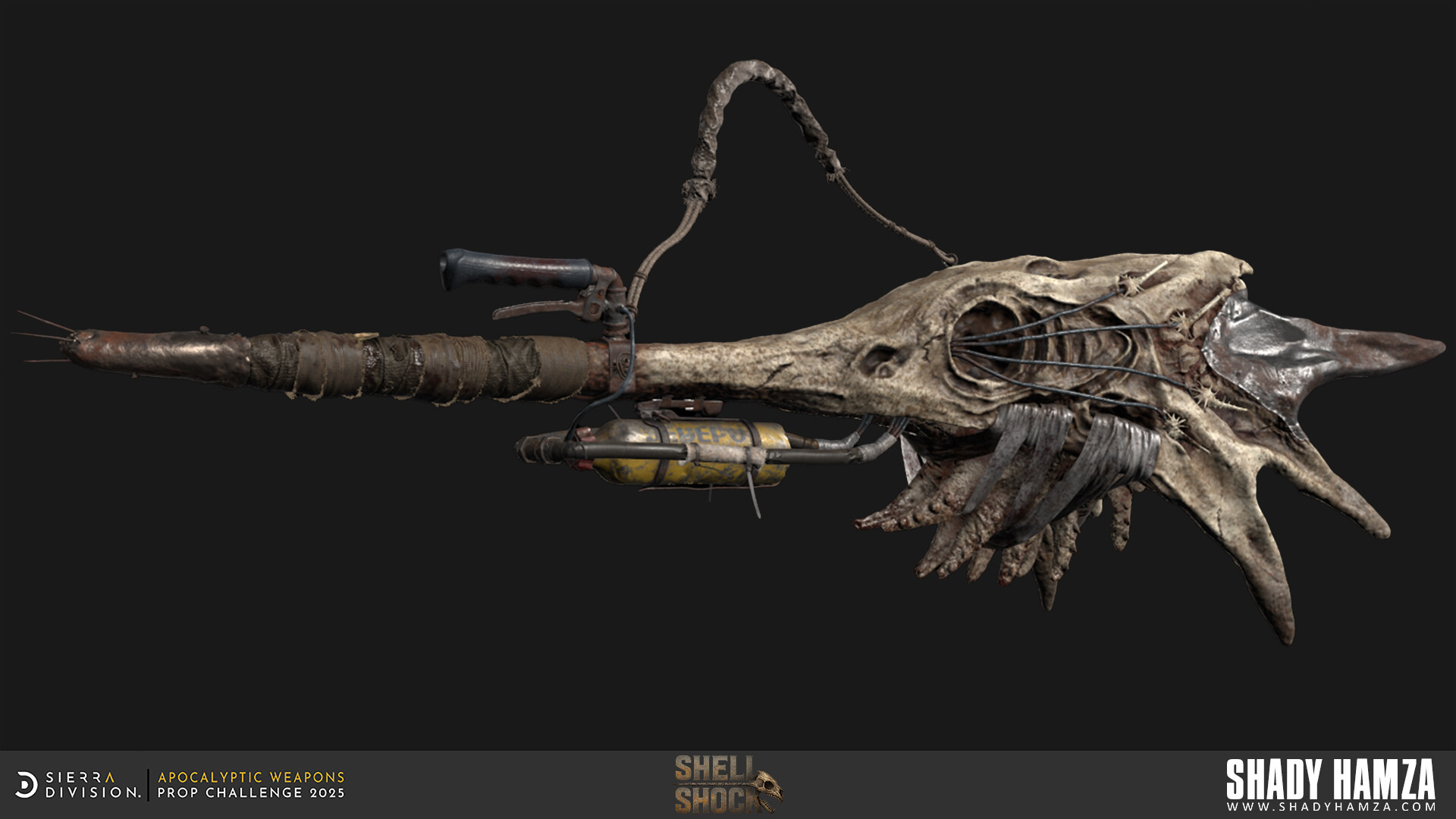
In a future where the Earth is submerged beneath endless oceans, survivors have adapted to a world of water and ruin. The weapon, “ShellShock” is a brutal, hand-crafted artifact of this new world. Built from the skull of a swordfish and adorned with scavenged seashells, it blends nature’s resilience with human ingenuity.
The swordfish skull serves as the core, embodying the sharp precision and deadly nature of its original form, while the jagged edges of the skull’s remains make it a deadly close combat weapon. Attached shells and hardened coral serve both as armor for the wielder and additional lethality in battle, reflecting the rough, resourceful existence of the survivors.
This weapon is a symbol of the new era, a brutal reminder of nature’s ferocity and humanity’s fight for survival in a flooded, unforgiving world.
Weapon Breakdown:
1.Core Weapon Design: Swordfish Skull Concept: The weapon’s core body is crafted from the skull of a swordfish, a formidable predator of the deep. This skull serves as the base, embodying the fusion of natural and mechanical elements. The sharp, angular design of the swordfish skull makes the weapon ideal for slashing and piercing attacks.
Visuals/Details: The skull retains the swordfish’s distinctive elongated nose, which could function as a thrusting spear for close-quarters combat. The design integrates jagged, skeletal fragments and exposed bone, symbolizing the harsh, dangerous world the weapon has evolved from. Waterlogged textures and decay effects (like barnacles or coral growths) give it an authentic, aged, and battle-worn appearance.
2. Upgrade 1: Lambis Spider Conch Seashell (Axe Attachment) Concept: The first upgrade involves the attachment of a Lambis spider conch seashell to the swordfish skull. This seashell serves as a brutal axe head, designed for more heavy-hitting, devastating melee attacks. Functionality: The shell is fused seamlessly to the skull, with spiny, razor-sharp edges, allowing for chopping and cleaving motions. Its aquatic design makes it both a functional and thematic extension of the weapon, representing the harsh, resourceful world where survival requires improvisation and adaptability.
Visuals/Details: The seashell retains its natural curves and spiral patterns, now sharpened and transformed into an offensive weapon. Water or algae-covered textures will be applied to the seashell to tie it into the flooded environment theme.
3. Upgrade 2: Pressure Deadly Gas Canister (Chemical Sprayer) Concept: The final upgrade is a high-tech pressure canister that, when attached to the skull, enhances the weapon with a chemical spray mechanism. Tubes extend around the skull, connecting to the canister, which can either release a toxic gas or billowing smoke to disorient enemies.
Functionality: The canister releases a concentrated, poisonous gas in short bursts, disabling or poisoning enemies within range. Alternatively, it can discharge thick smoke for stealth and confusion, allowing the wielder to escape or set up ambushes. The gas canister is connected by flexible tubes that wrap around the skull, creating a menacing, almost serpentine appearance.
Visuals/Details: The canister itself appears industrial, with rusted, reinforced metal and retrofitted tubing. Tubes are corroded and covered in marine life, with fish and barnacles indicating the weapon's continuous exposure to water. The skull will feature vents or valves, suggesting an active mechanism for the release of gas or smoke.
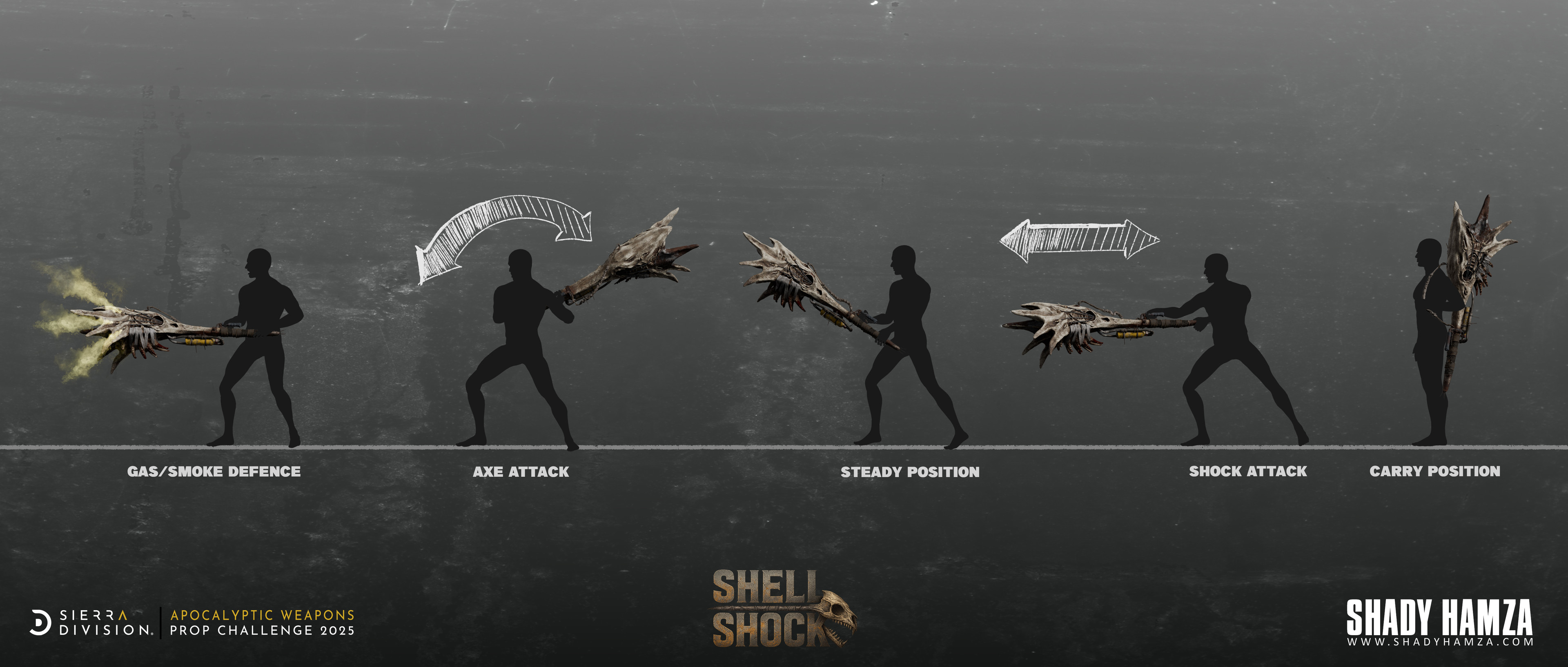
Functionality & Combat Usage: Versatility: The ShellShock is a versatile weapon in combat, offering multiple forms of attack: Piercing/Thrusting: The swordfish skull acts as a spear, useful in long-range or thrust-based combat. Slashing/Chopping: With the seashell attachment, it becomes a powerful axe, allowing the user to cleave through enemies. Chemical Warfare/Stealth: The pressure gas canister adds an element of crowd control, poisoning enemies or creating confusion with smoke.
Adaptability: The weapon is designed to be upgradeable, allowing it to grow in strength and versatility as the user finds new components or achieves better materials. The combination of aquatic and industrial features ensures that it fits into the apocalyptic, flooded world while maintaining an effective combat presence. Thematic Design & Aesthetic:
Flooded World Aesthetic: The weapon is a reflection of the apocalyptic world, incorporating elements from both the natural world (the swordfish skull and seashell) and human-made technology (gas canister and tubing).The wear and tear on the materials, along with the marine life attached, reflect the constant battle for survival in an ever-deteriorating, flooded world. Survival & Resourcefulness: The weapon’s design symbolizes the resourcefulness necessary in a post-apocalyptic world where survival depends on salvaging materials and adapting tools from the environment.
Visual Impact: The juxtaposition of bone, shell, and industrial tech creates a weapon with a striking silhouette, where each upgrade feels like a logical evolution of the piece.
Conclusion: The ShellShock represents the harsh, aquatic future where combat is brutal, and survival requires ingenuity. It is not just a weapon but a testament to a world where people and technology must adapt to an ever-changing, flooded environment. Through its upgrades, the ShellShock is a dynamic weapon, capable of both savage melee and strategic chemical warfare, making it a formidable tool for those who dare wield it.
Log 04: The 3D Blocking - The Swordfish Skull (Core Weapon)
Introduction to the Process: In this fourth log, I’m diving into the next phase of the design process blocking out the 3D shapes that will serve as the foundation for the ShellShock weapon. This phase is crucial because it’s where I take the concepts and references gathered earlier and translate them into basic 3D forms that can later be refined and detailed. The goal here is to establish the silhouette, proportions, and overall structure before diving into the finer details like textures and mechanical elements.
Why Blocking Is Important: Blocking out shapes in 3D helps me visualize the weapon in a tangible form, making sure all the proportions and interactions between different parts of the design are functional and visually striking. At this stage, I’m focused on getting the overall “feel” of the weapon its scale, the relationship between the swordfish skull, seashells, and added tech before refining it into a polished asset. This will also allow me to spot any potential issues with proportions or flow early in the process, ensuring that the weapon is both believable and effective in its design.
The Swordfish Skull (Core Weapon):
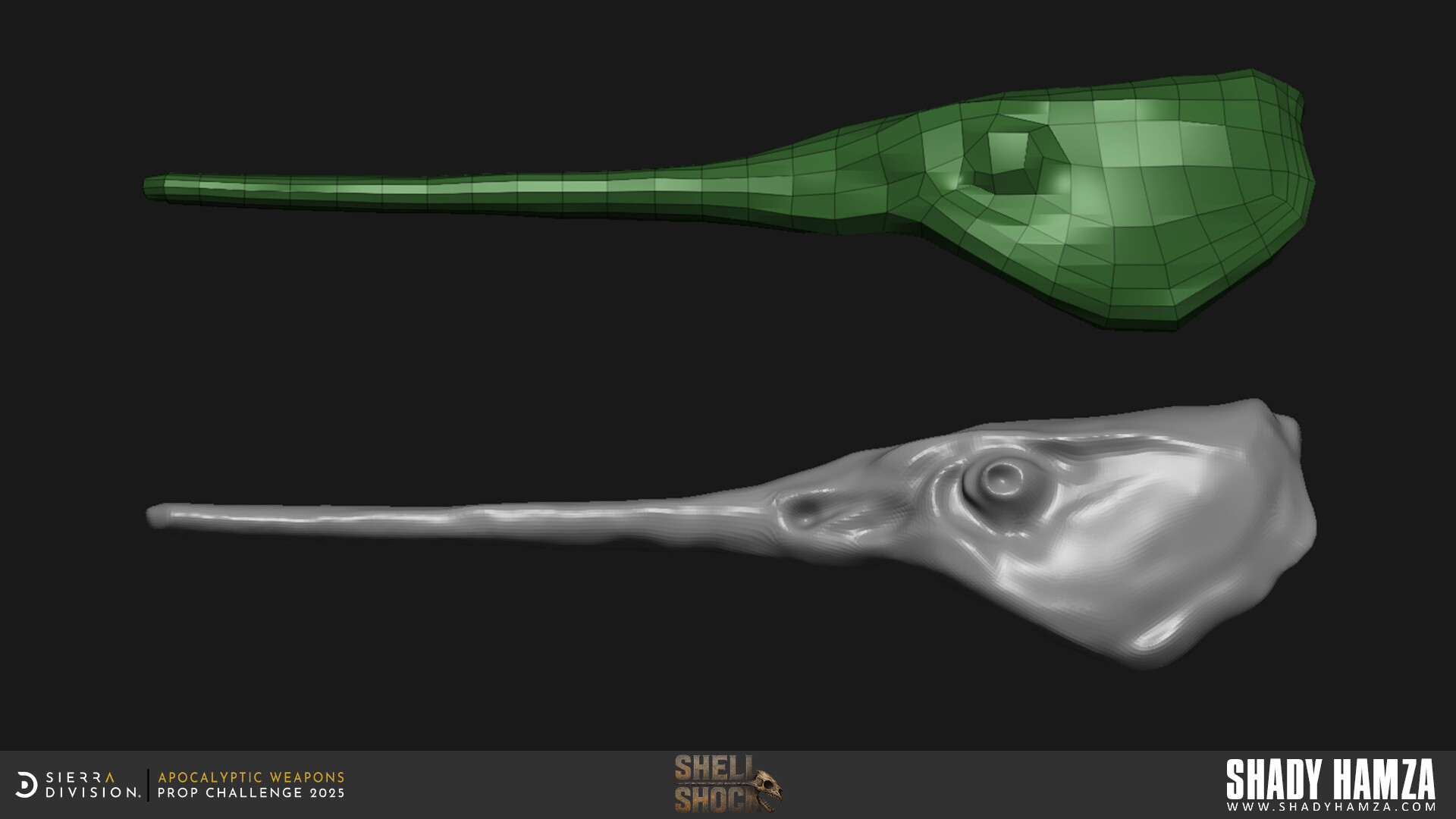
- The swordfish skull will serve as the anchor for the weapon. I’m blocking out its distinct, elongated shape and sharp features using basic geometric forms like spheres, cylinders, and cubes. The goal is to get the proportions correct, with the skull’s nose elongated enough to suggest its function as a thrusting spear.
- The jagged edges of the skull, representing the sharp bone fragments, will be roughly blocked in using triangular prisms and irregular shapes to suggest the dangerous nature of the weapon.
- The most important part here is ensuring the skull’s silhouette feels like the apex predator it represents, with a menacing and precise aesthetic. I'll focus on capturing its natural curvature and sharpness to lay the groundwork for the final detailed model.
Log 05: Refining the Swordfish Skull Shape - Sharpening the Core Weapon
Introduction to the Process: In this fifth log, I’m focusing on the next phase of the design process refining the shape of the swordfish skull. After successfully blocking out the core forms, the next step is to hone in on the silhouette and proportions, ensuring the skull embodies the sharp, streamlined qualities of a swordfish. This phase is critical for achieving a balanced, aggressive design that feels both organic and menacing, setting the stage for later detailing and texture work.
Why Refining the Swordfish Skull Shape Matters: The swordfish skull is the focal point of the entire weapon, and its refinement will greatly influence the overall feel and believability of the design. At this stage, it’s important to pay attention to the curvature, sharpness, and overall silhouette. By refining the skull, I’ll ensure that it aligns with the original vision of a lethal, spear-like weapon that seamlessly integrates both organic and mechanical elements.
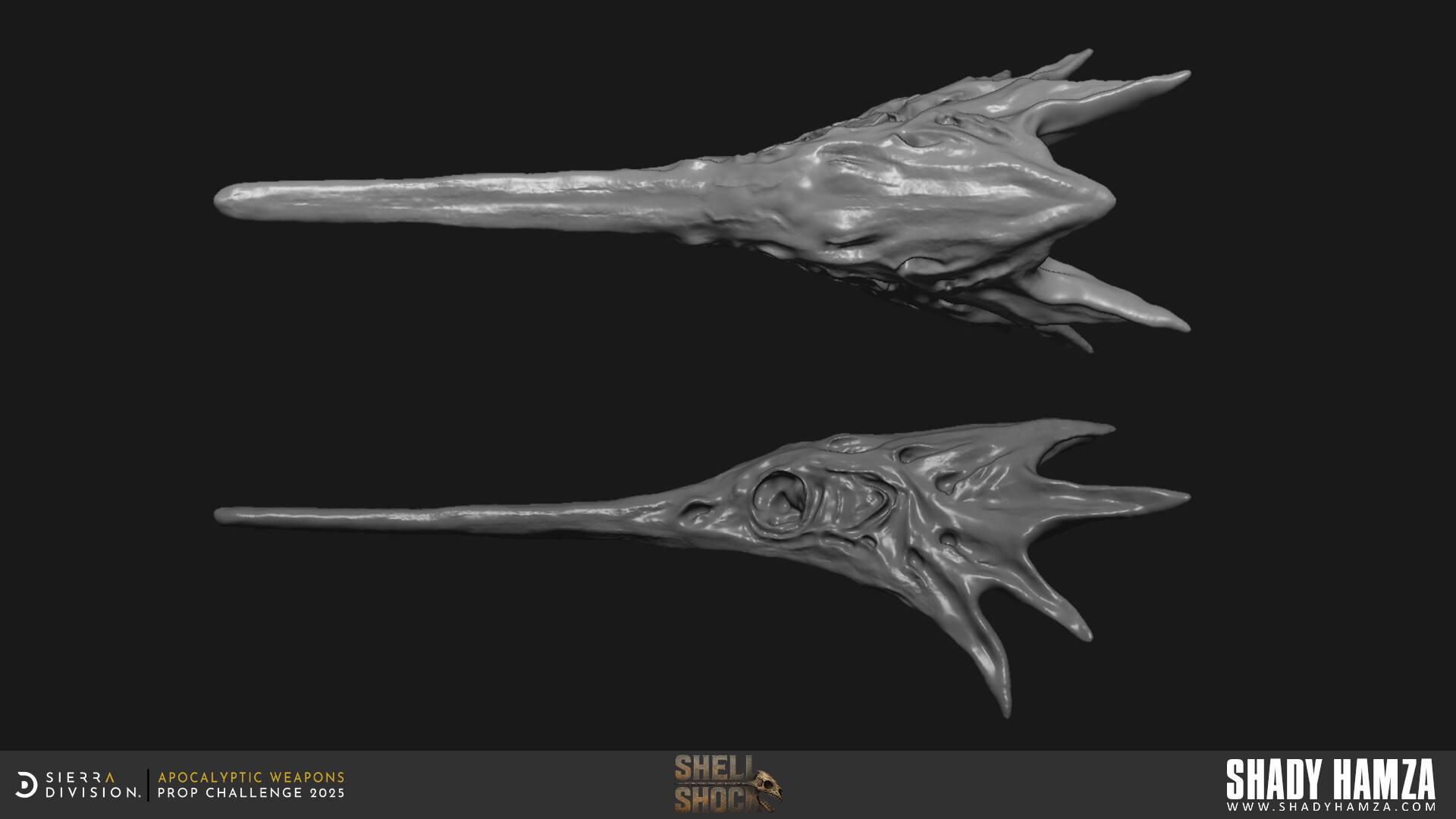
Refining the Shape: With the basic blocking completed, I’ve started smoothing out the major transitions between shapes, sharpening key features, and refining the proportions. The focus here is on making the swordfish skull appear dangerous and purposeful, while maintaining its natural elegance.
Conclusion: This refinement process is about creating a visually striking, believable swordfish skull that embodies the sharp, aggressive nature of the creature it represents. With the sharpness and flow of the skull now honed, the next steps will involve integrating finer details and ensuring the skull meshes seamlessly with the rest of the weapon’s design. The end goal is a dynamic, dangerous-looking weapon that feels like it could belong in an apocalyptic world, blending nature and technology in a way that feels both futuristic and primal.
Log 06: The Seashell Attachment – A Sharp and Impactful Upgrade
Introduction to the Process: In this sixth log, I’m diving into the next crucial step of the design process: integrating the seashell attachment into the Swordfish Skull weapon. After the initial blocking of the skull, it’s time to focus on the seashell, which will enhance the weapon’s functionality and aesthetic appeal. This attachment needs to feel like a natural extension of the skull, while also standing out as a distinct and impactful upgrade to the core weapon.
Why the Seashell Is Important: The seashell is more than just a visual enhancement; it’s an essential part of the weapon’s offensive capabilities. By integrating a Lambis shell into the design, I’m adding an element that feels both organic and battle-worn. The sharp, spiraling curves of the shell will provide a unique contrast to the angular edges of the swordfish skull, offering a balance of flow and aggression. The seashell will not only serve as an offensive tool, adding a slashing element to the weapon, but it will also serve as a visual focal point that accentuates the skull’s dangerous, predator-like aura.
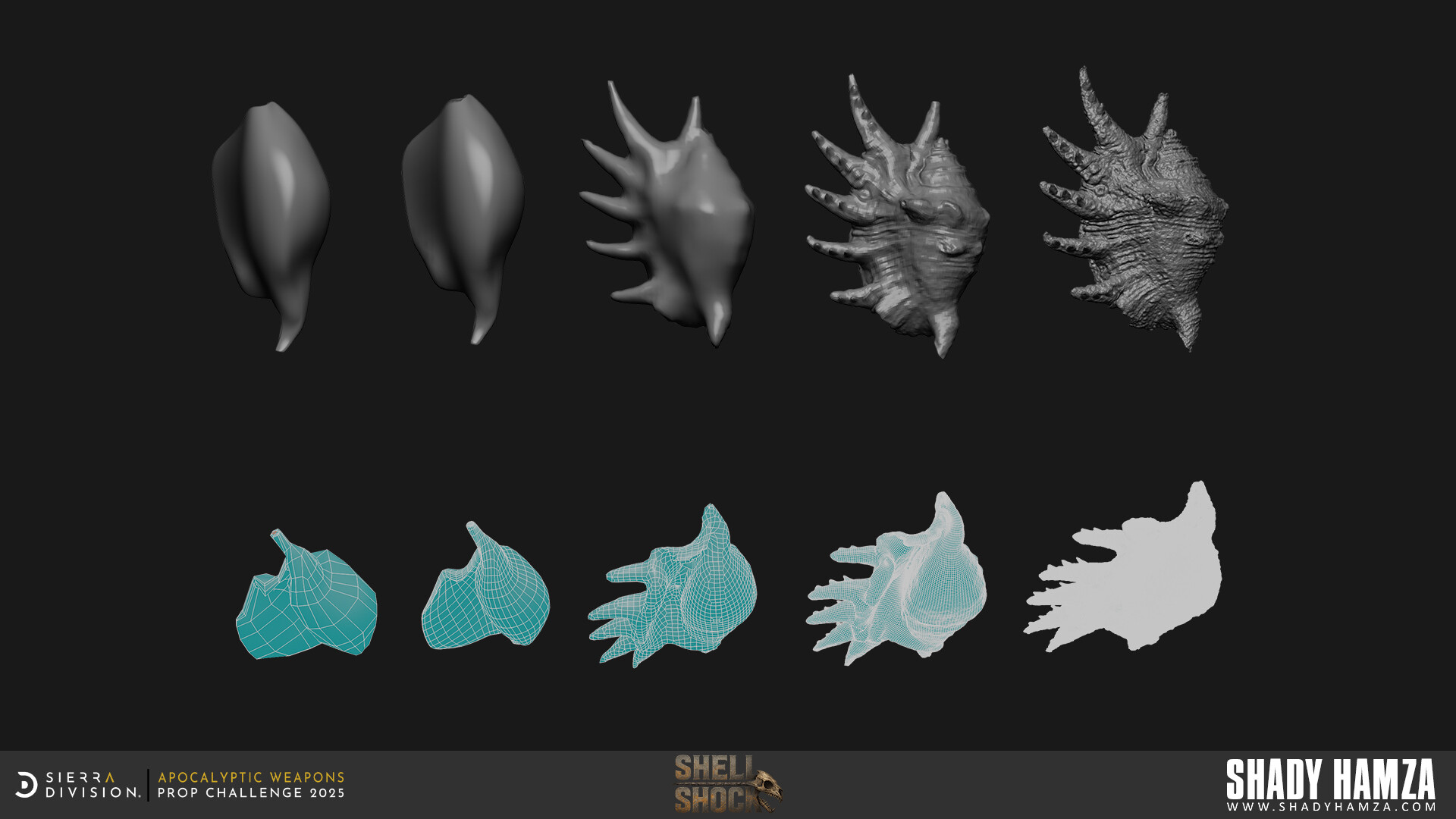
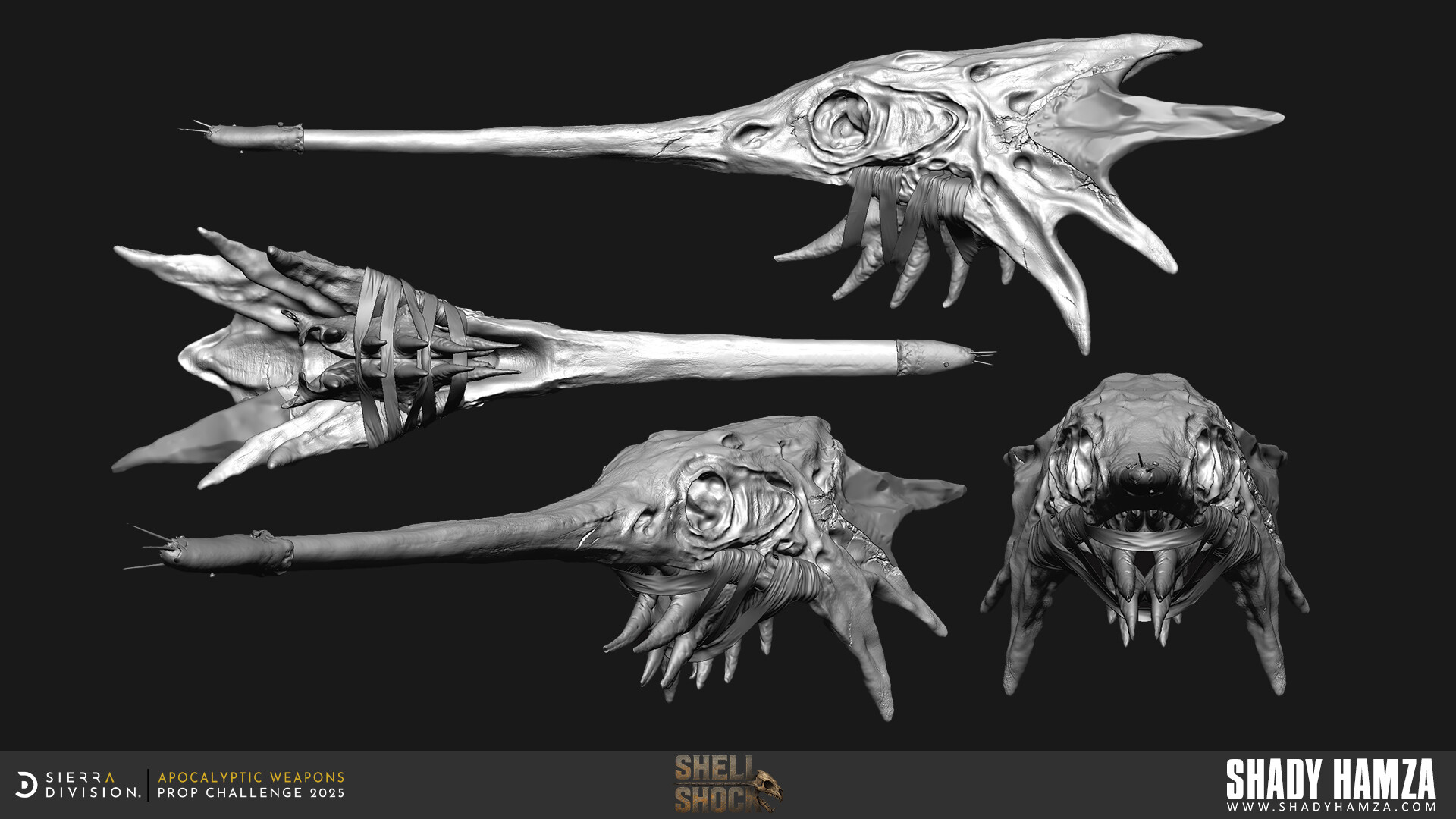
Proportions and Integration: A key challenge here is to balance the seashell’s presence with that of the skull. It’s important that the shell’s size and shape don’t overshadow the skull, but instead feel like a well-thought-out addition to the weapon’s overall form. I’ll place the shell at an angle that complements the thrusting nature of the swordfish skull, ensuring that it adds both offense and visual interest without detracting from the menacing silhouette I’ve established with the skull.
Conclusion: As I continue with the blocking process, my focus will be on refining the relationship between the swordfish skull and the seashell. The goal is to create a weapon that feels like an evolved, deadly tool something that has been carefully designed, tested, and adapted for the harshest battles. By making sure the shell integrates smoothly with the skull, I’m ensuring that both visual appeal and functionality are balanced, setting the stage for the next phase of refinement and detailing.
Log 07: Pressure Gas Canister (Chemical Sprayer) Final Weapon Upgrade
Overview: The chemical sprayer upgrade has been successfully integrated into the weapon. The focus was on blocking out the cylindrical form of the pressure canister, which now has a rugged, industrial aesthetic. While it remains relatively small compared to the skull and seashell, its high-tech functionality is clear, making it stand out as a critical component of the weapon. The design effectively blends the organic and industrial elements, creating a seamless and functional post-apocalyptic weapon.
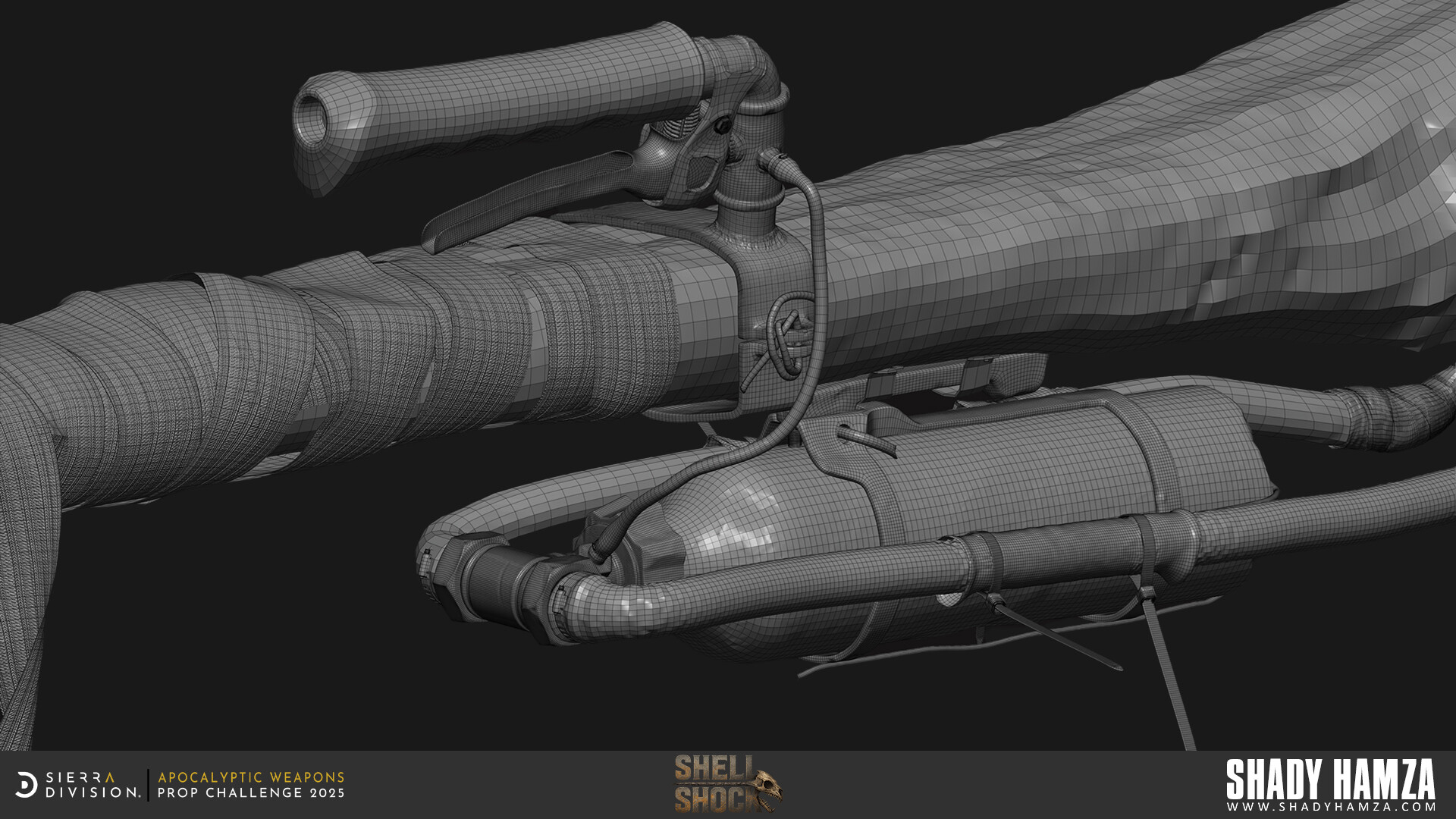
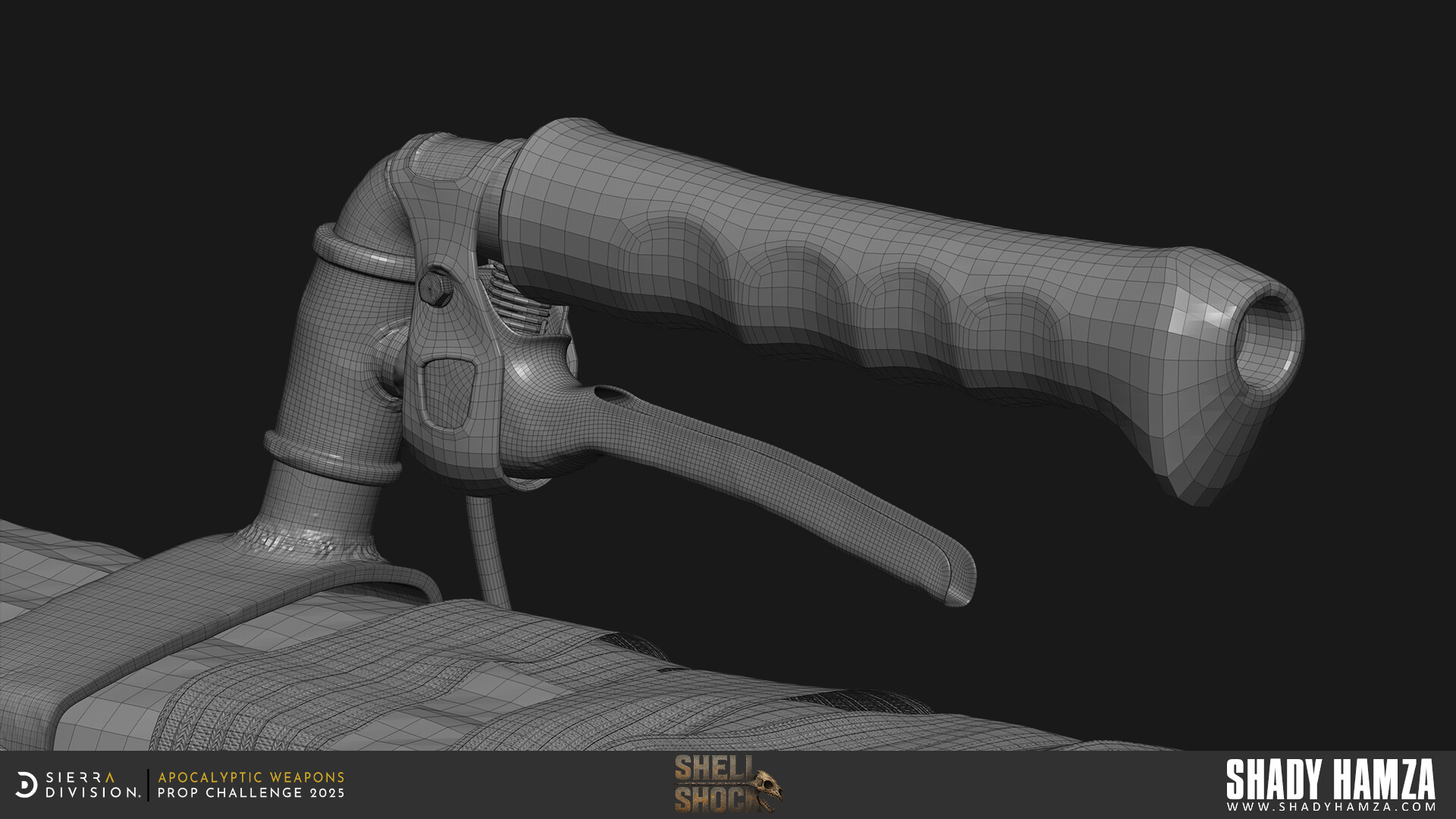
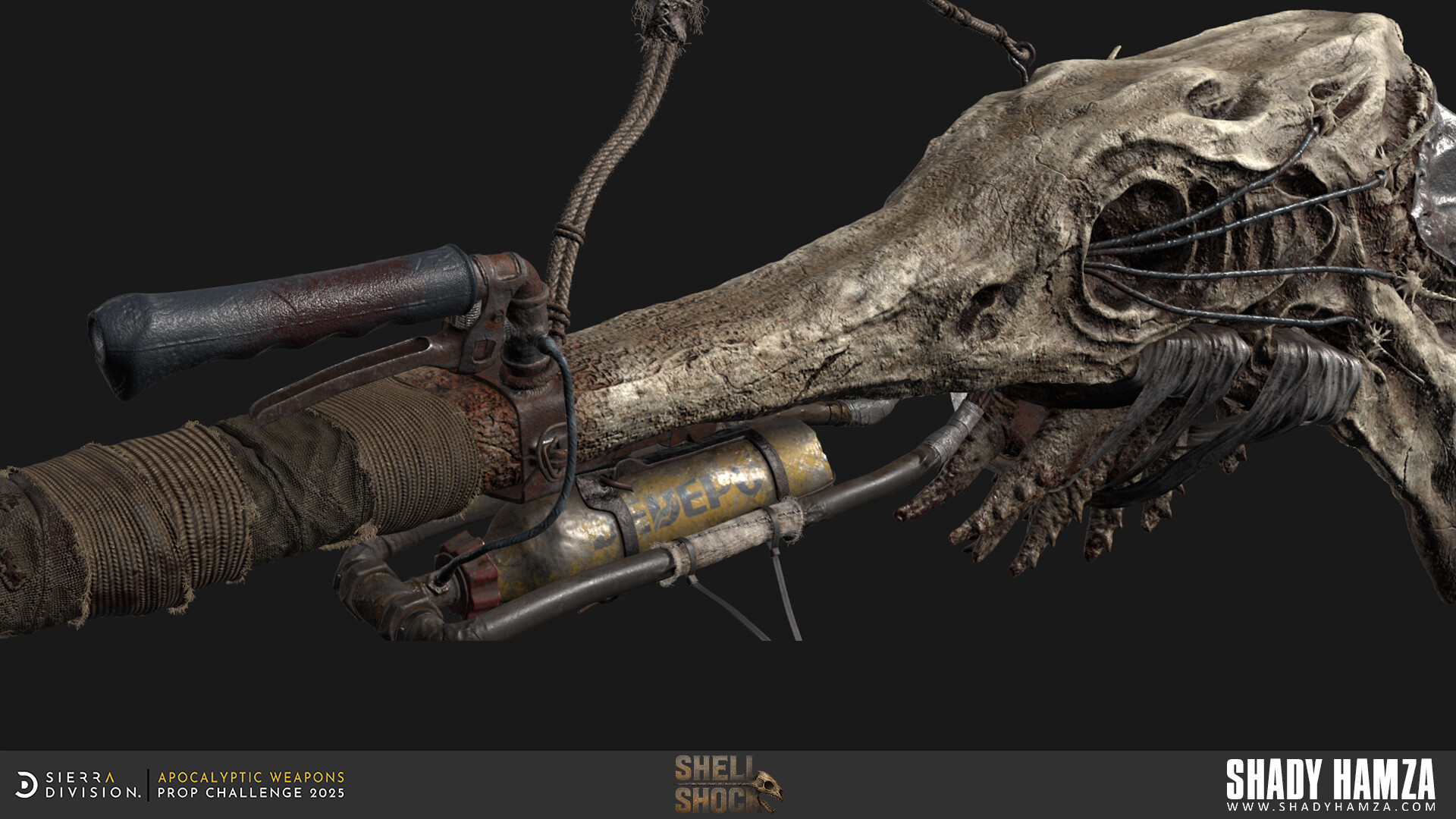
Pressure Canister Design: The pressure canister was constructed using simple cylindrical shapes to maintain an industrial, post-apocalyptic feel. After blocking out the basic form in Blender, I added subtle details like scratches, rust, and minor dents, giving it a worn, rugged appearance. The canister is compact but visually heavy, with the added weight provided by valves, nozzles, and pressure gauges. These details not only make the canister feel like a functional, integral part of the weapon but also reinforce its high-tech functionality within a post-apocalyptic context.
Connecting Elements - Pipes and Tubes: The pipes and tubes that wrap around the skull were modeled with twisted, flexible shapes to simulate their natural, organic form. These tubes now serve the functional purpose of transporting the chemical fluid from the canister to the seashell nozzles, while also adding visual interest by mimicking the look of tendrils or veins. The design of the tubes ensures they wrap around the skull in a way that feels purposeful, dynamic, and alive. This organic movement contributes to the hybrid nature of the weapon, perfectly blending the industrial tech with the natural, animalistic elements of the skull and seashell.
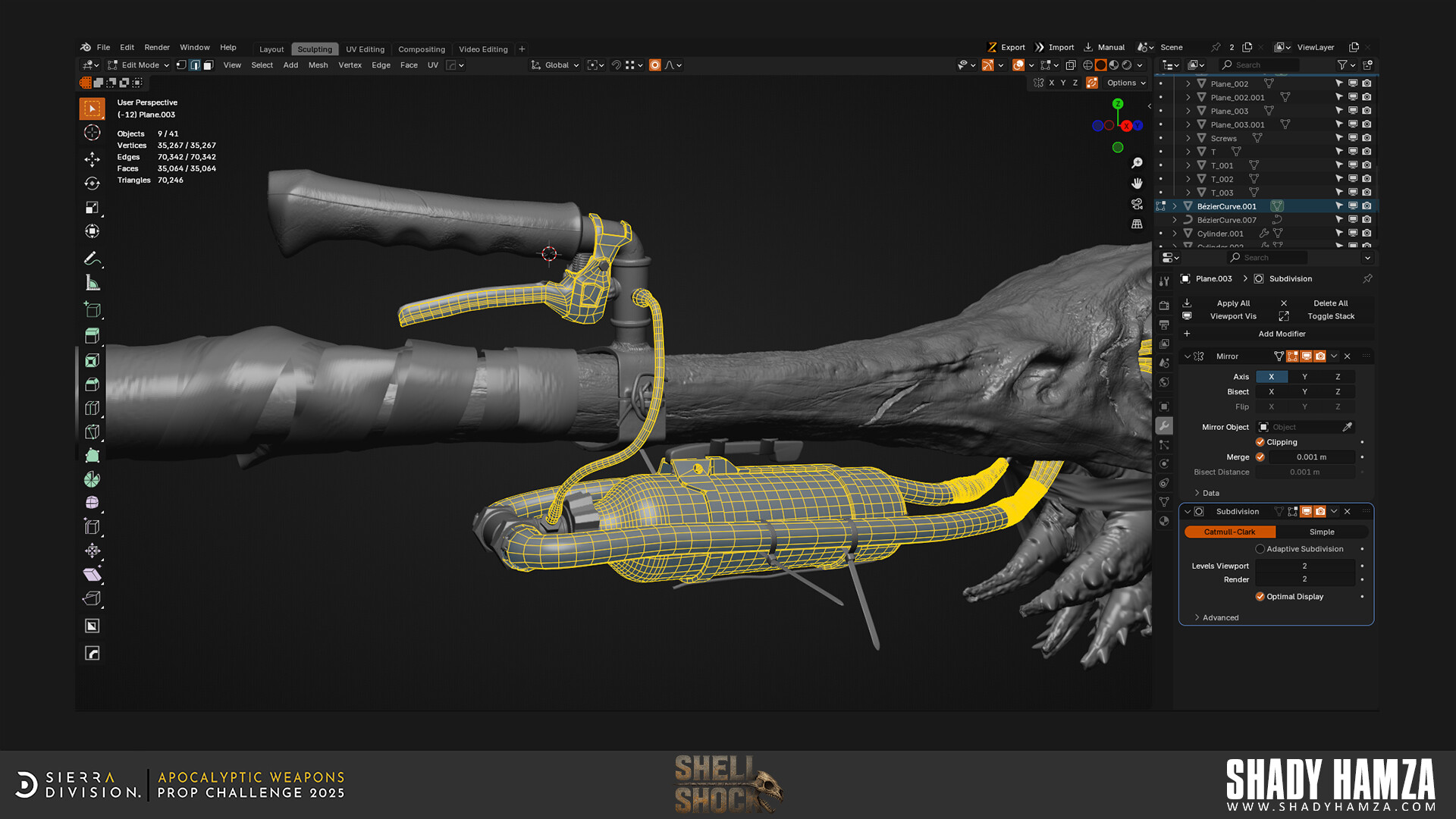
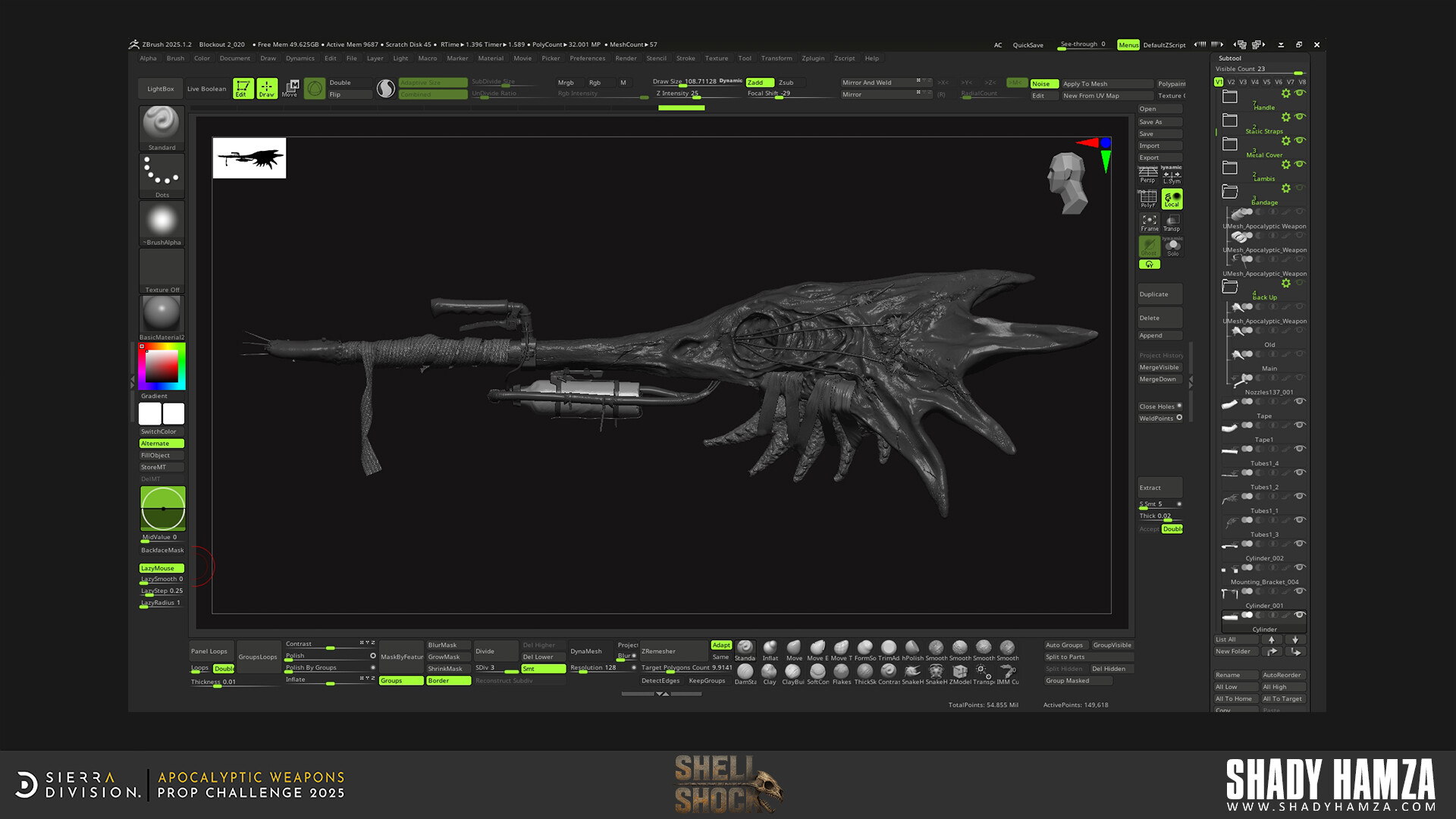
Fusion of Organic and Industrial Elements: The fusion of organic and industrial elements has been successfully achieved. The transition zones where the canister meets the skull were carefully sculpted to create a smooth and believable integration. The pipes and tubes wrapping around the skull now tie the organic and industrial parts together, enhancing the visual depth and functionality of the weapon. The final result feels like a truly hybrid, post-apocalyptic weapon, where each element feels like it has been designed to work in harmony with the others.
This upgrade has successfully enhanced the weapon by combining organic and industrial elements in a way that feels both functional and visually cohesive. The chemical sprayer is now a fully realized, post-apocalyptic hybrid that stands out both in design and execution.
Log 08: Final Touches Before UVs
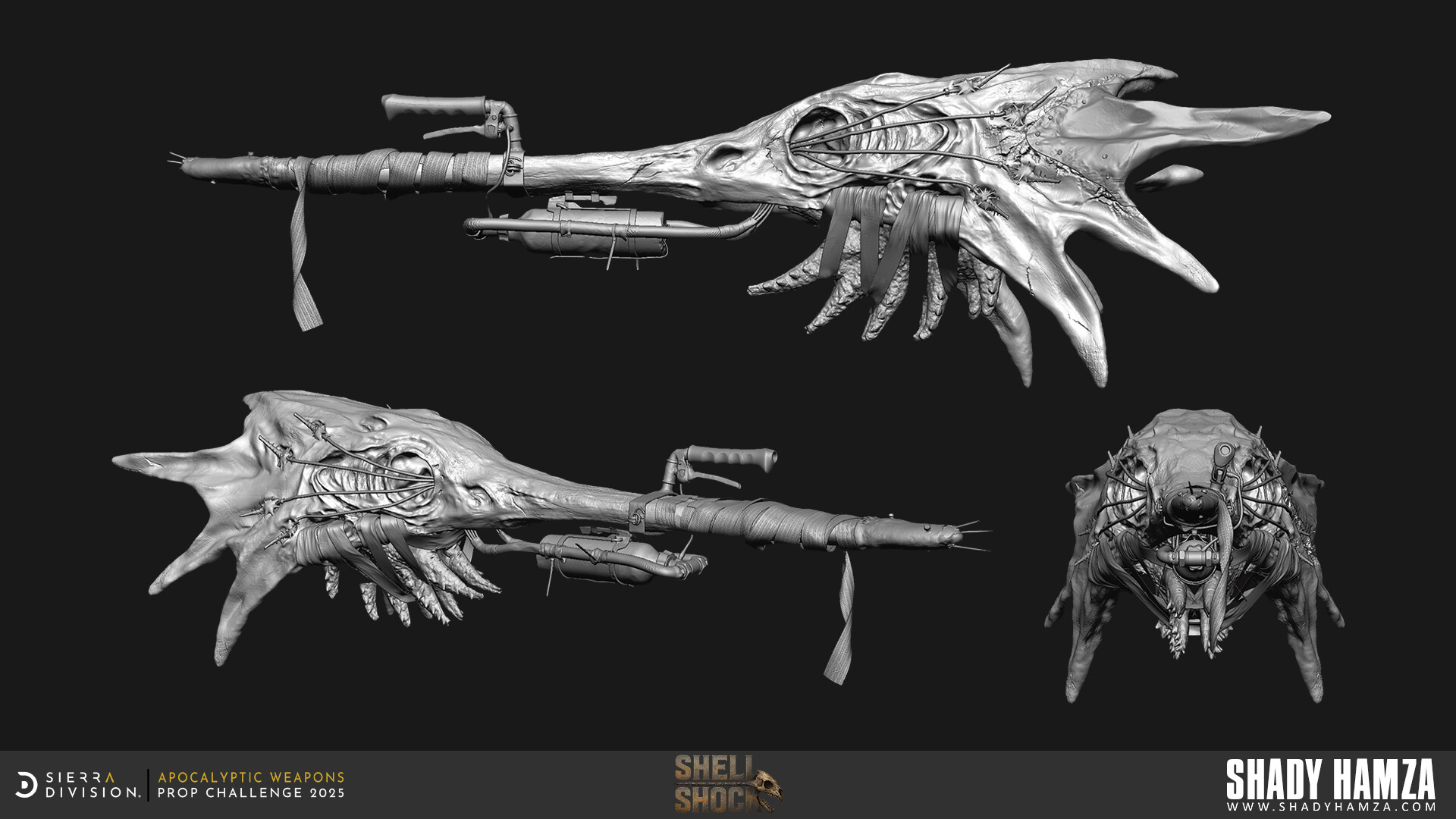
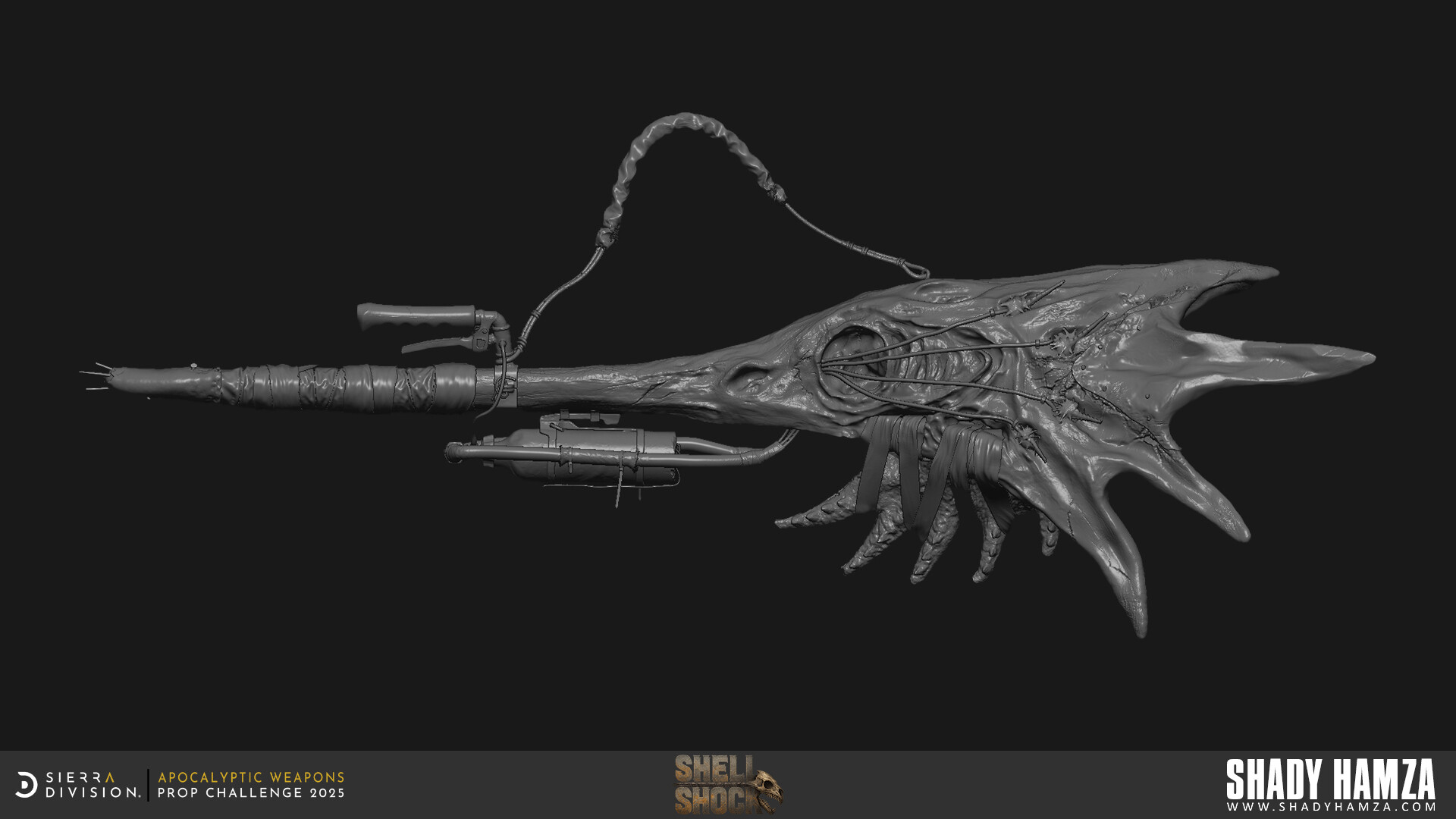
Kept this update light and focused, just wrapped up the final touches before moving into UVs.
The main additions here were the shoulder strap and some tweaks to the grip fabric. The strap helps sell the idea that this weapon is meant to be carried through harsh, long treks, something scavenged or crafted with utility in mind, not just brutality. I wanted it to feel believable in-world, like the kind of thing a survivor would sling over their back between fights.
As for the grip, I adjusted the wrapping to feel more grounded tighter in some areas, looser in others, like it’s been hastily repaired a few times. Little details, but they help give it that extra bit of realism and storytelling without needing to go overboard.
Log 09: UVs
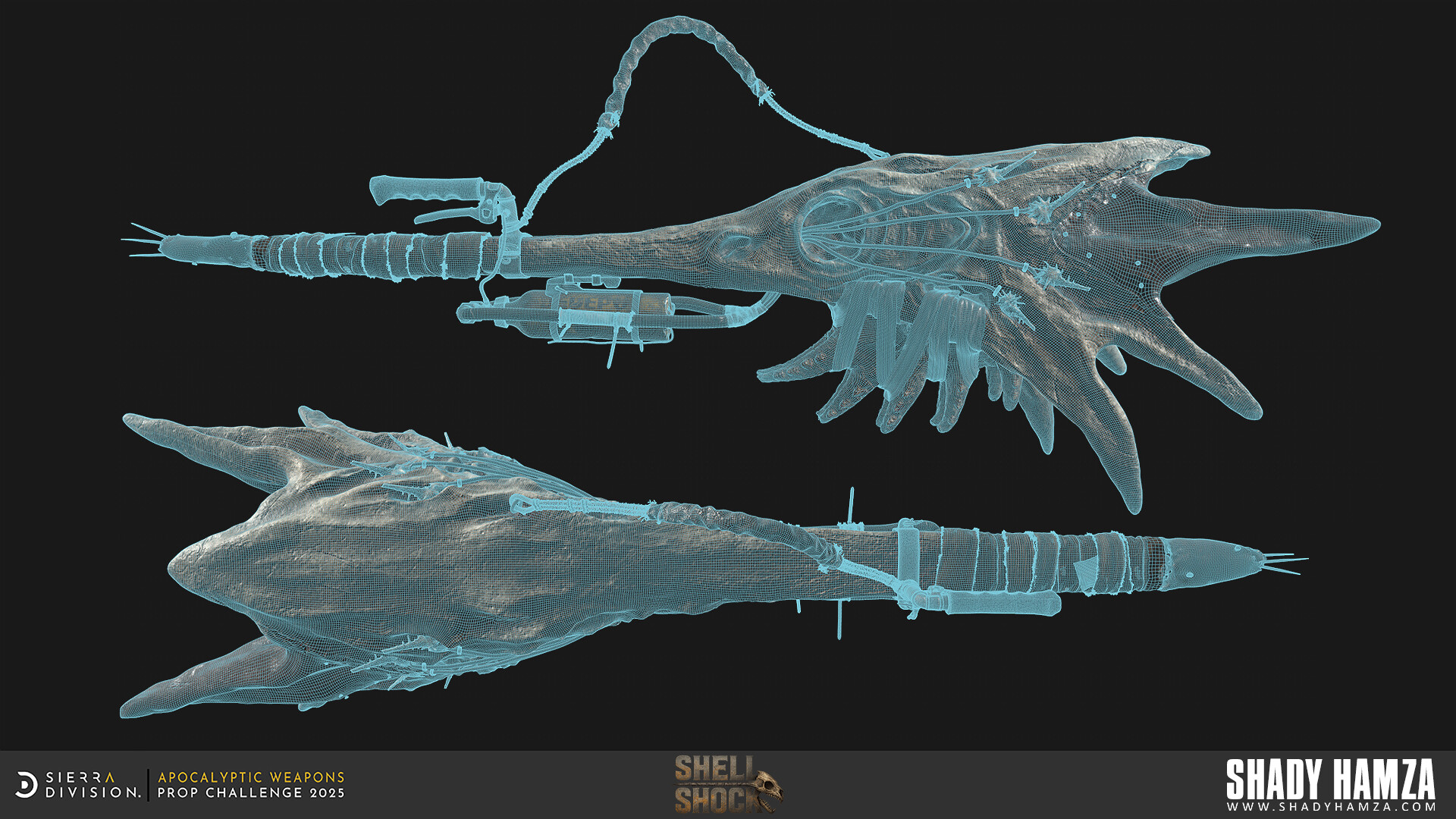
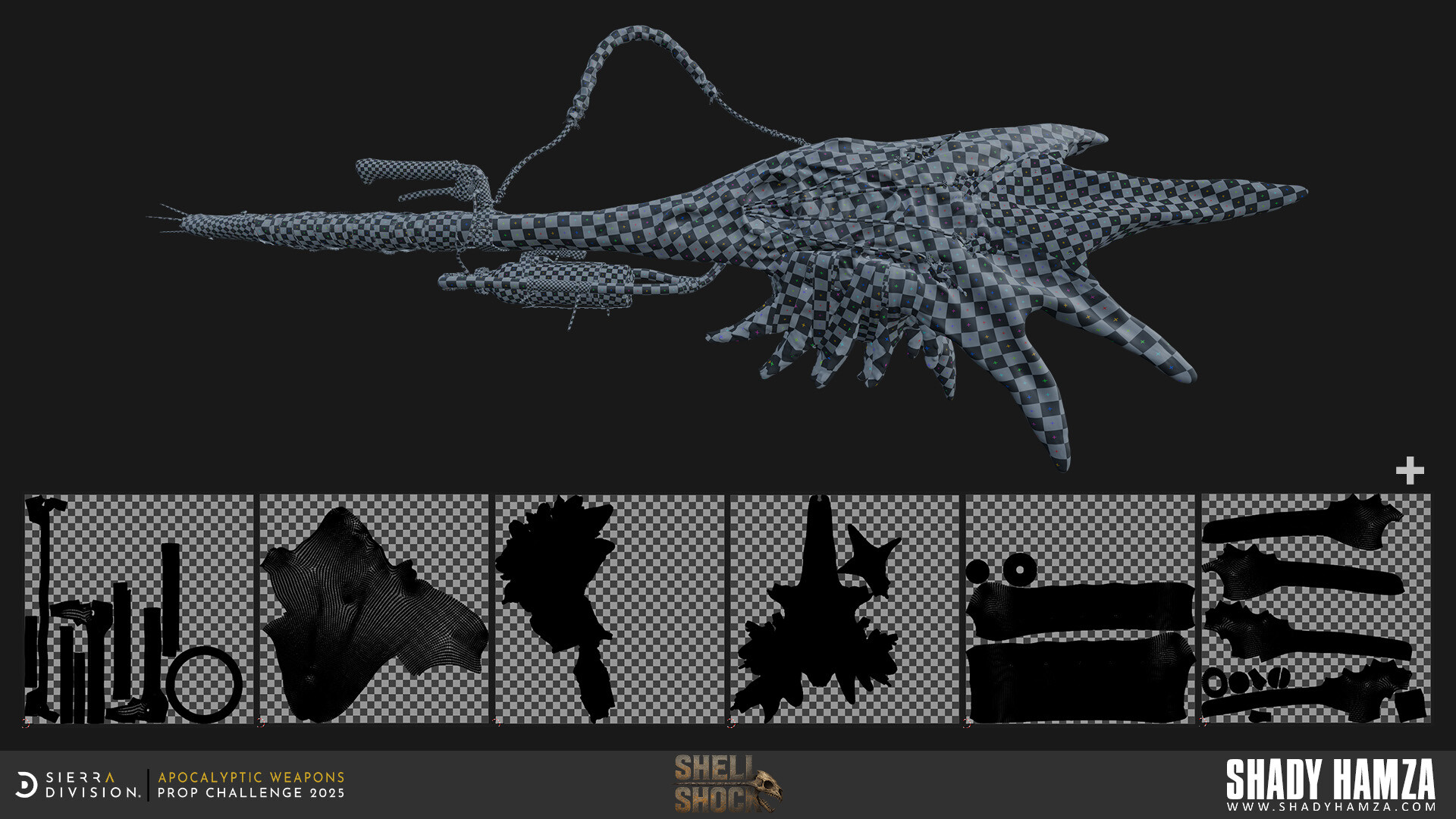
I used a combination of ZBrush and Blender to get them done. ZBrush handled the initial organization mainly for sending out clean, grouped islands then I jumped into Blender to fine-tune everything and make sure the layout was efficient and clean for baking later.
Since this weapon is a mix of organic and mechanical elements, I tried to keep the UV seams hidden along natural breaks or beneath the grip wrappings, so they won’t stand out once textured. Also made sure the texel density is even across the whole model to give me flexibility during painting without stretching or compression.
It’s a pretty dense model, so keeping everything tidy and optimized took some extra time, but it’s all set now and ready for baking and texture work.
Log 10: Texturing
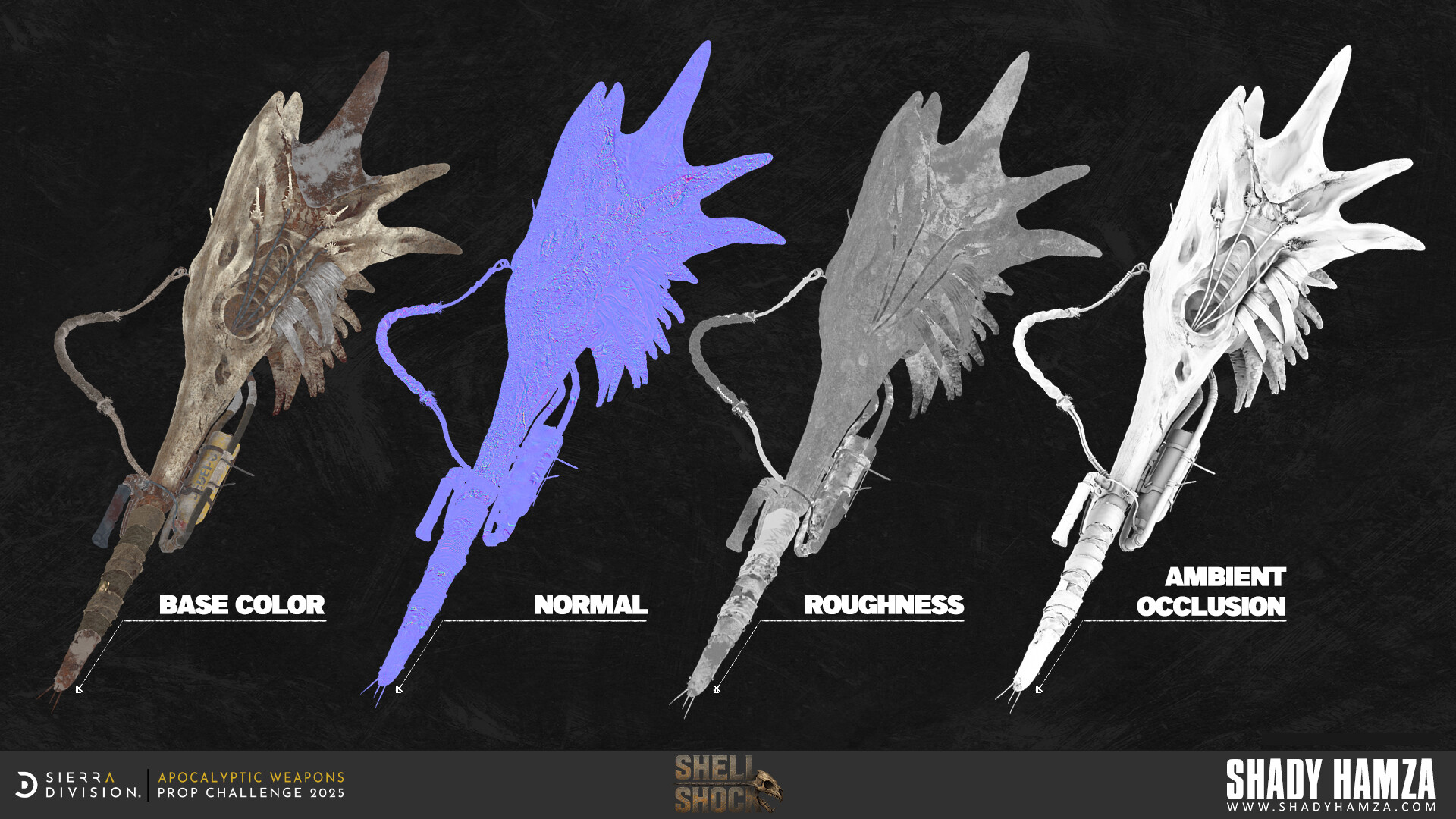
Overview: The texturing phase for the weapon has officially begun, and the focus was on creating a gritty, worn aesthetic that aligns with the post-apocalyptic theme. Using Substance Painter, I’ve focused on blending industrial and organic elements, enhancing the weapon’s hybrid design. The texturing process was particularly important for highlighting the contrast between the mechanical and organic parts, ensuring each element feels unique but still works as a cohesive whole.
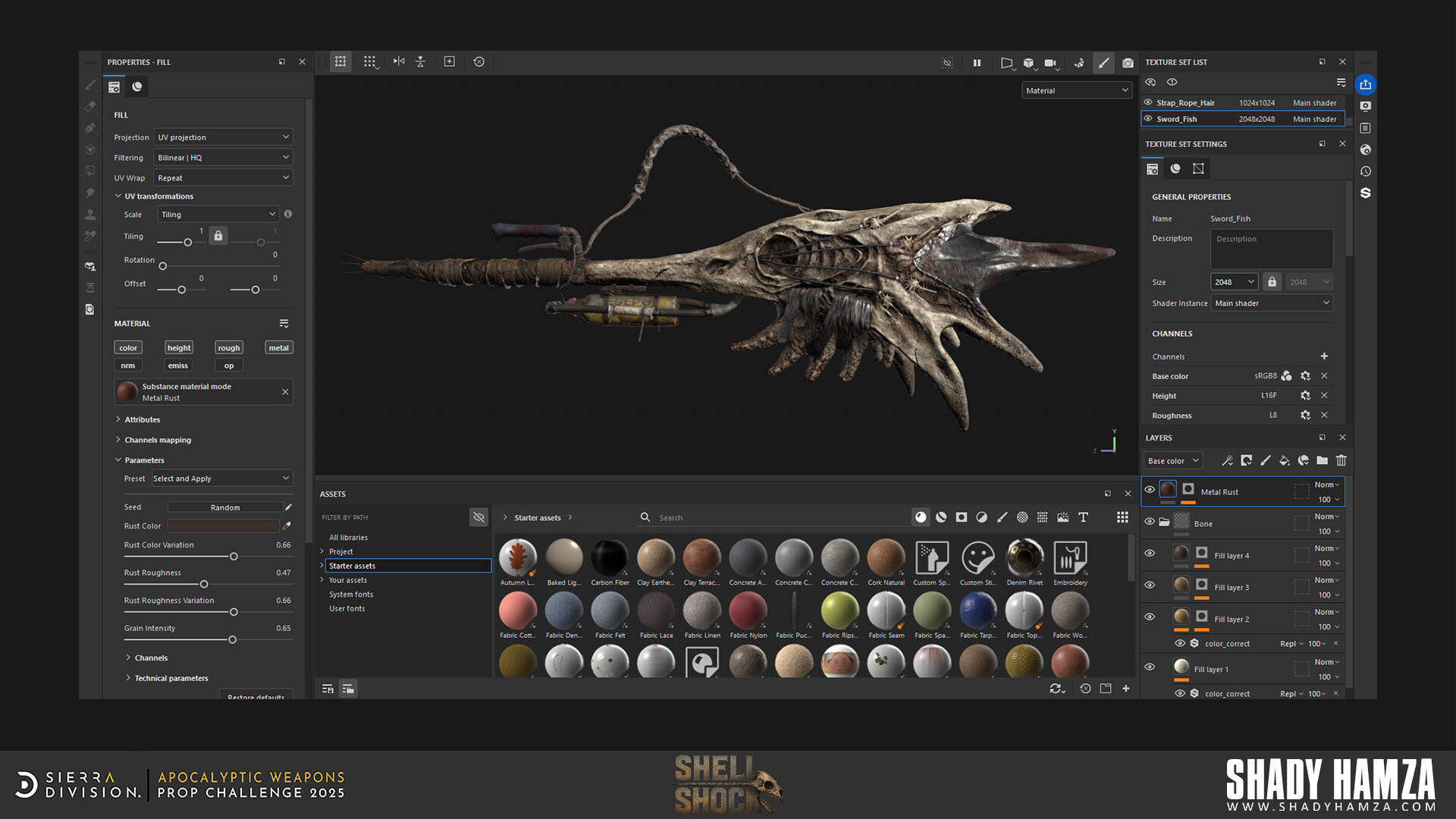
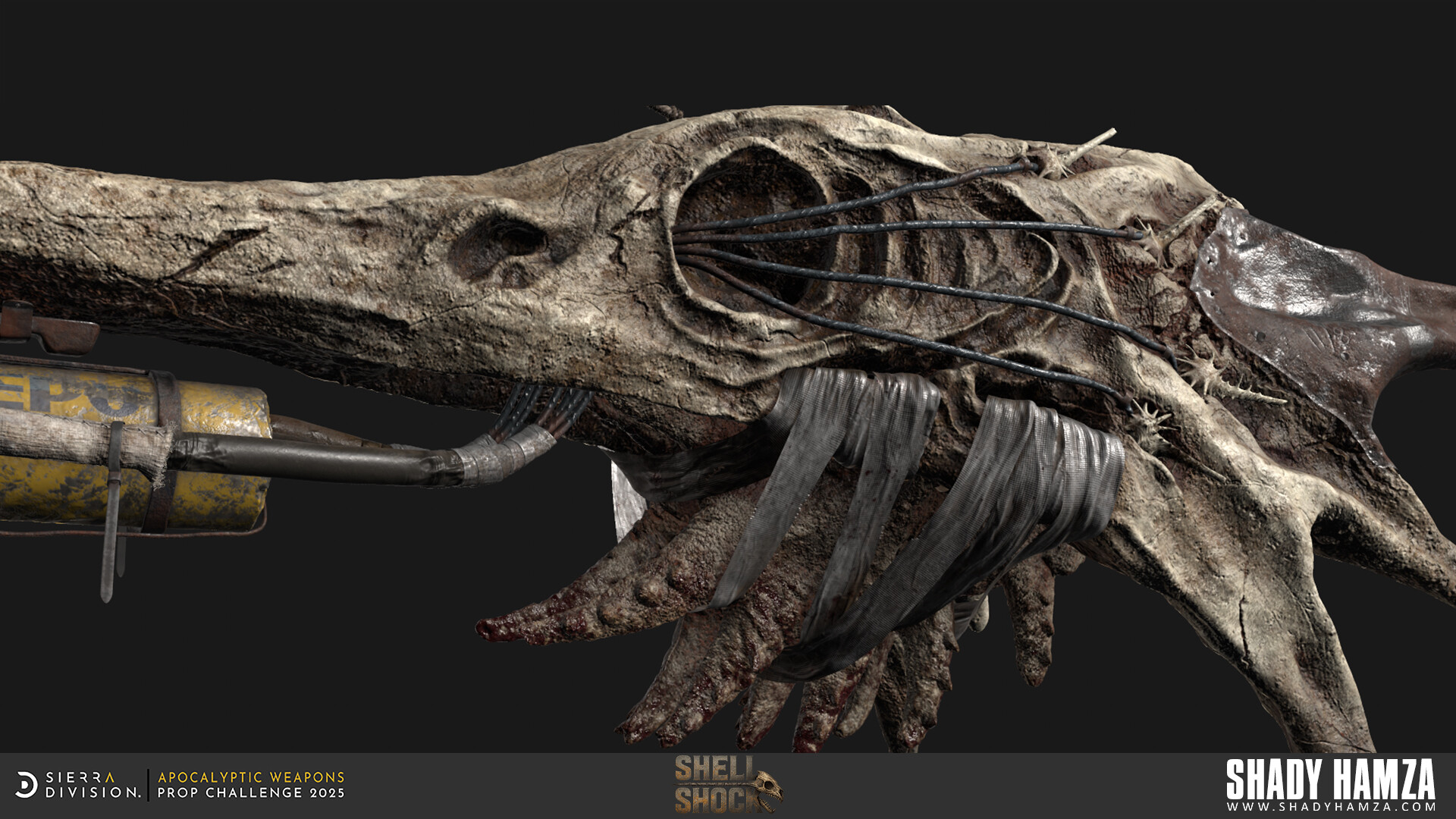
Base Materials & Workflow: The first step was establishing the base materials for the different components metal for the pressure canister and pipes, organic skin tones for the skull, and rough, natural textures for the seashell nozzles. I used a variety of procedurally generated masks to achieve a sense of wear and tear, simulating scratches, rust, and grime accumulation, especially on the metallic parts. For the skull and seashell, I aimed for a slightly weathered but still natural look aging the bone-like material subtly with dirt, stains, and some cracks to give it character without losing its organic essence.
I started with a base color for each section and layered detail on top using smart materials and hand-painted elements. This approach allowed me to create a balance between uniformity and chaos, where everything feels part of the same world yet distinct in its material properties.
Roughness & Detail: One of the critical aspects was the roughness map. Since the weapon has so many different materials, I had to carefully tweak the roughness values to make sure the surface differences were apparent. The pressure canister and pipes have a highly worn, matte finish with areas of rust and oil stains, while the skull and seashell have a more organic, semi-glossy sheen that makes them feel like they’ve been exposed to the elements but still hold onto their natural luster.
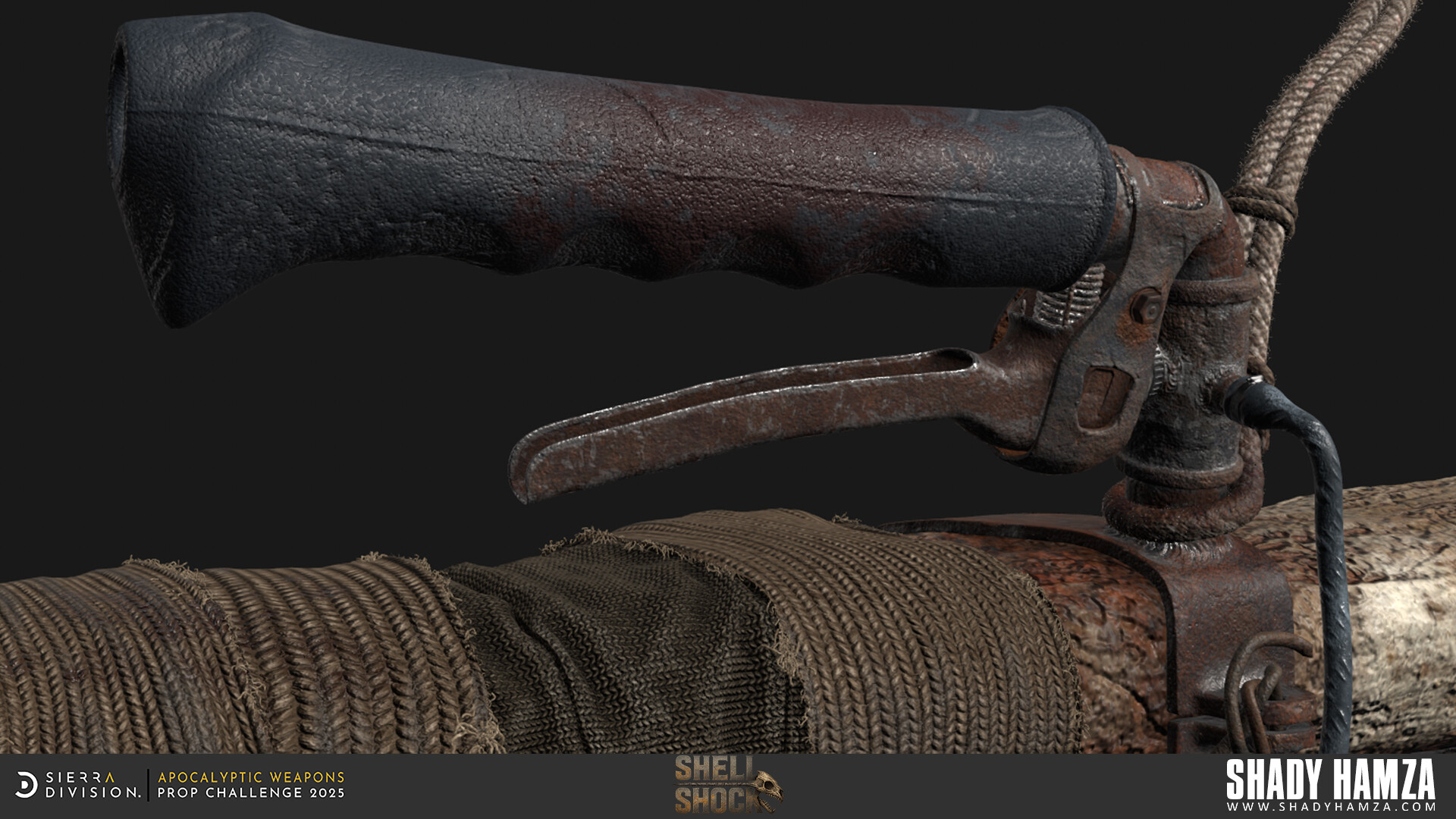
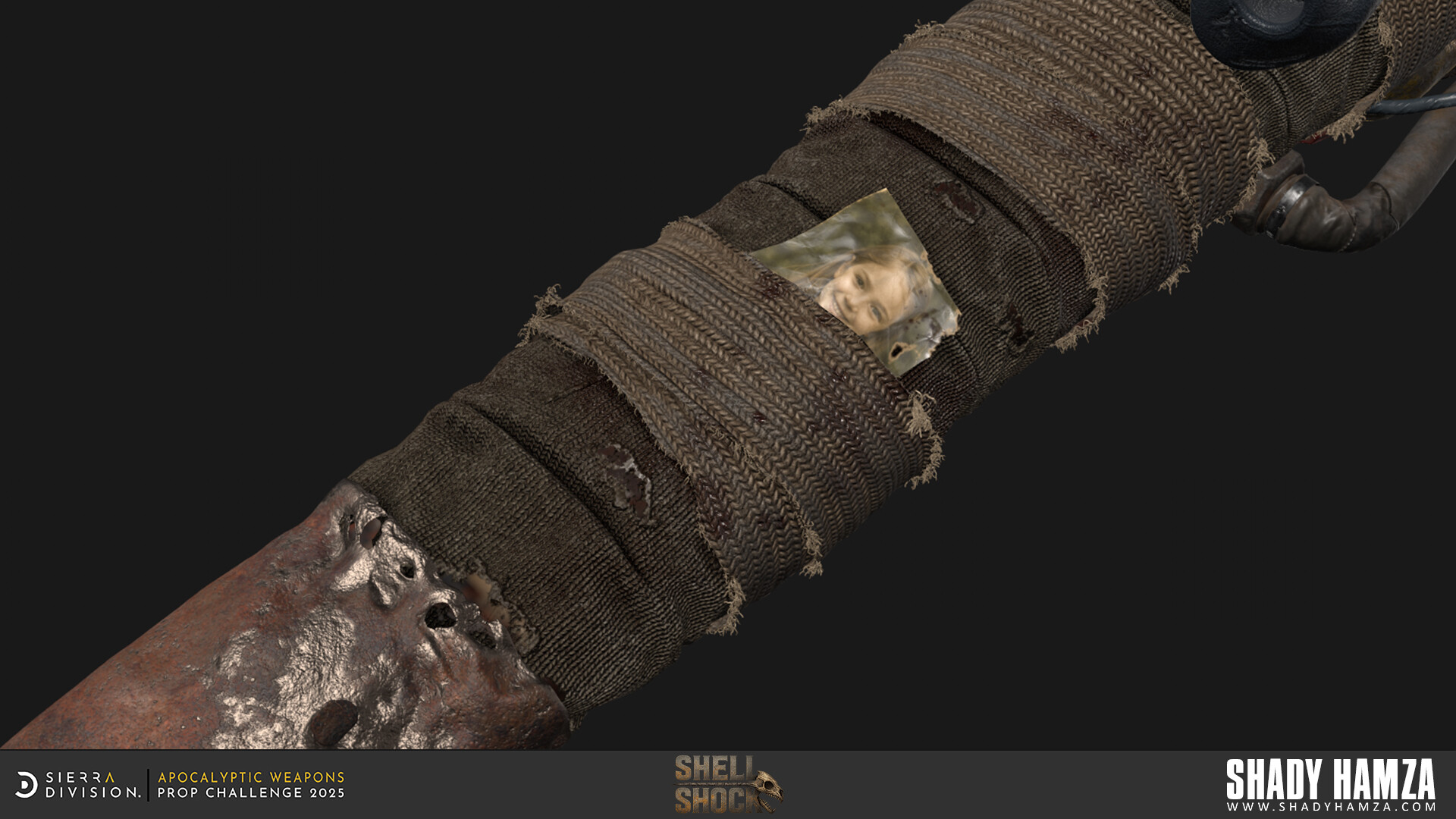
Final Touches & Integration: The final steps involved integrating the different elements to make sure the transition between the organic skull, seashell, and the mechanical parts was seamless. I used soft, faded transitions between the painted bone texture and the rugged metal surfaces, blending them together with dirt and grime. The pipes wrapping around the skull were also treated with this technique, ensuring they didn’t feel like separate parts but rather an organic extension of the weapon.
Results: The texturing process has successfully brought the weapon to life. The final result is a well-worn, high-tech, hybrid weapon that blends its organic and industrial elements effectively. The wear and tear on the pressure canister, the aged metal pipes, and the subtle imperfections on the skull and seashell give the weapon character, making it feel like a functional piece of post-apocalyptic technology.
Log 11: Overview - Final Beauty Renders Analysis
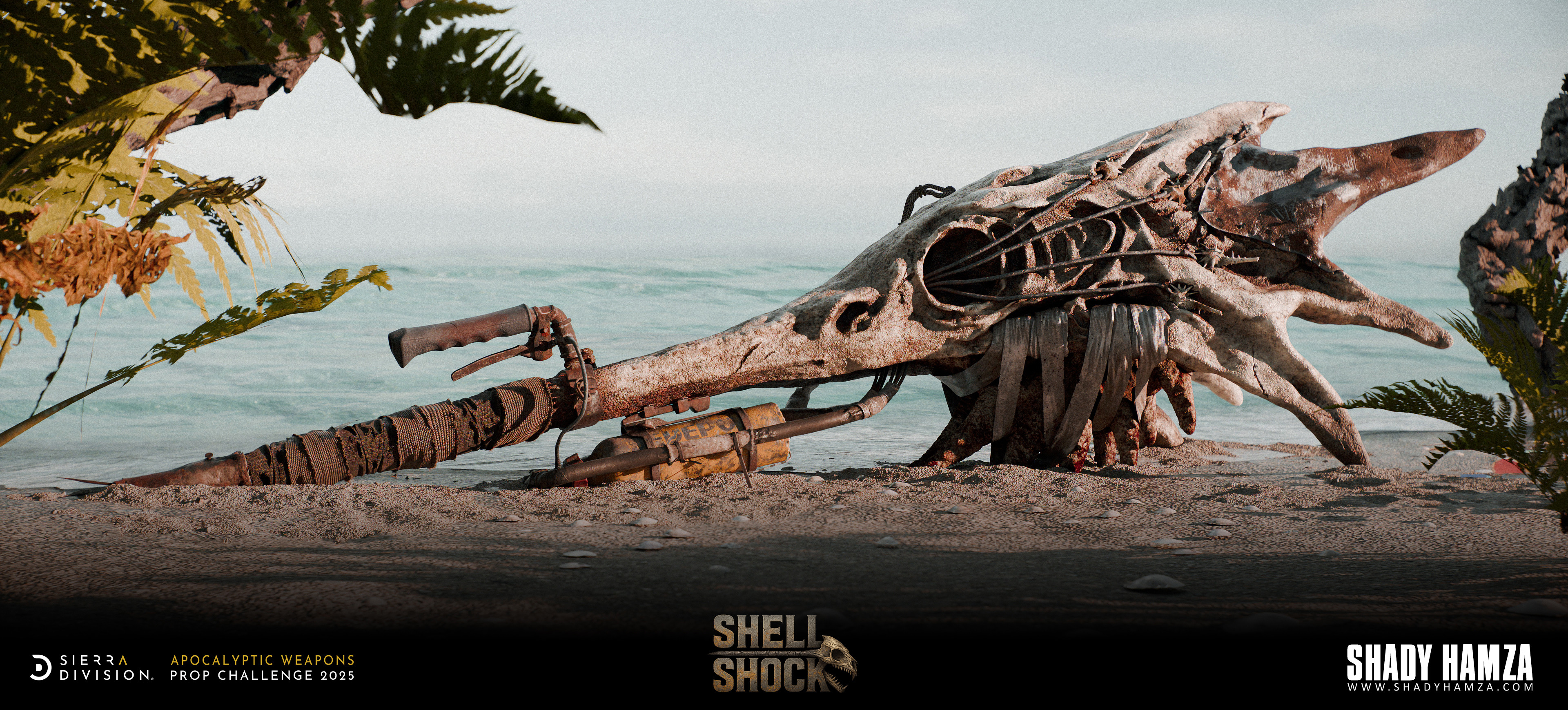
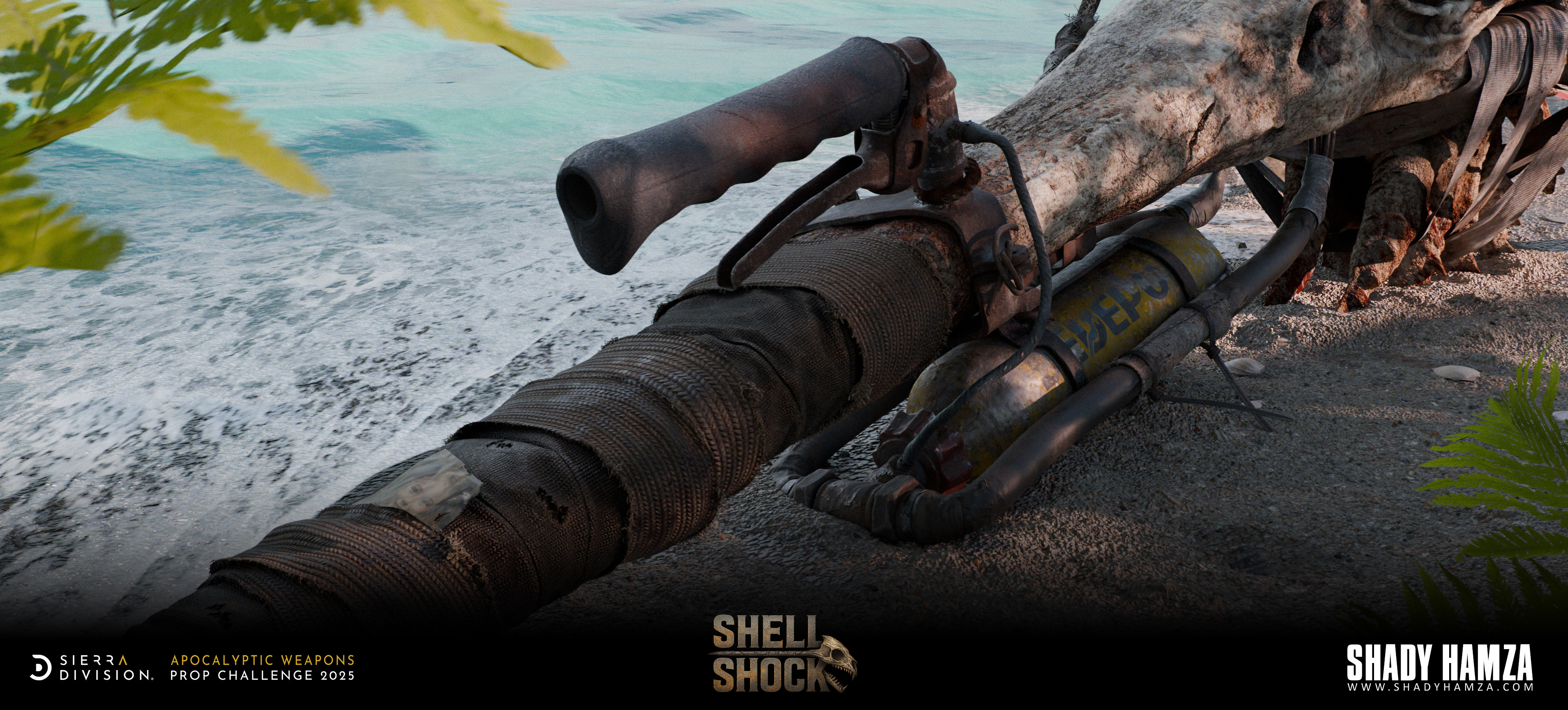
The final step in this project was setting up the beauty renders that bring everything full circle. To complement the weapon's post-apocalyptic design, I chose a beach environment that echoes the themes introduced in Log 01, where water reclaimed the land. This setting reflects a world in decay a forgotten WaterWorld where nature has overrun industrial remnants, and survival is etched into every rusted edge and splintered detail of the weapon.
This final presentation distills the weapon’s story through two distinct lighting scenarios set against a post-apocalyptic beach backdrop, each emphasizing different aspects of the design:
Sunny Render: In contrast, the second image uses harsh, direct sunlight, producing strong highlights and deep shadows that dramatically carve out the weapon’s form. The intense lighting reveals intricate textures such as worn metal edges, distressed surface details, and the interplay between organic components and industrial materials. The warm, golden tones of the sunlit sand amplify the rugged nature of the beach, while the sharp contrasts imbue the weapon with a cinematic, almost confrontational presence. This dynamic lighting choice suggests immediacy and tension, as if the relic might be reactivated at any moment.
Overcast Render: The first image features a soft, diffused overcast light that casts the weapon in a melancholic, almost ghostly light. The lack of harsh shadows allows the weathered surface details rust, chipped textures, and subtle grime to come forward gently. This approach creates a mood of abandonment, as if the weapon is a relic discovered on a deserted, waterlogged shore. The uniform, cool palette enhances a sense of desolation and quiet decay, inviting viewers to reflect on the passage of time and forgotten battles.
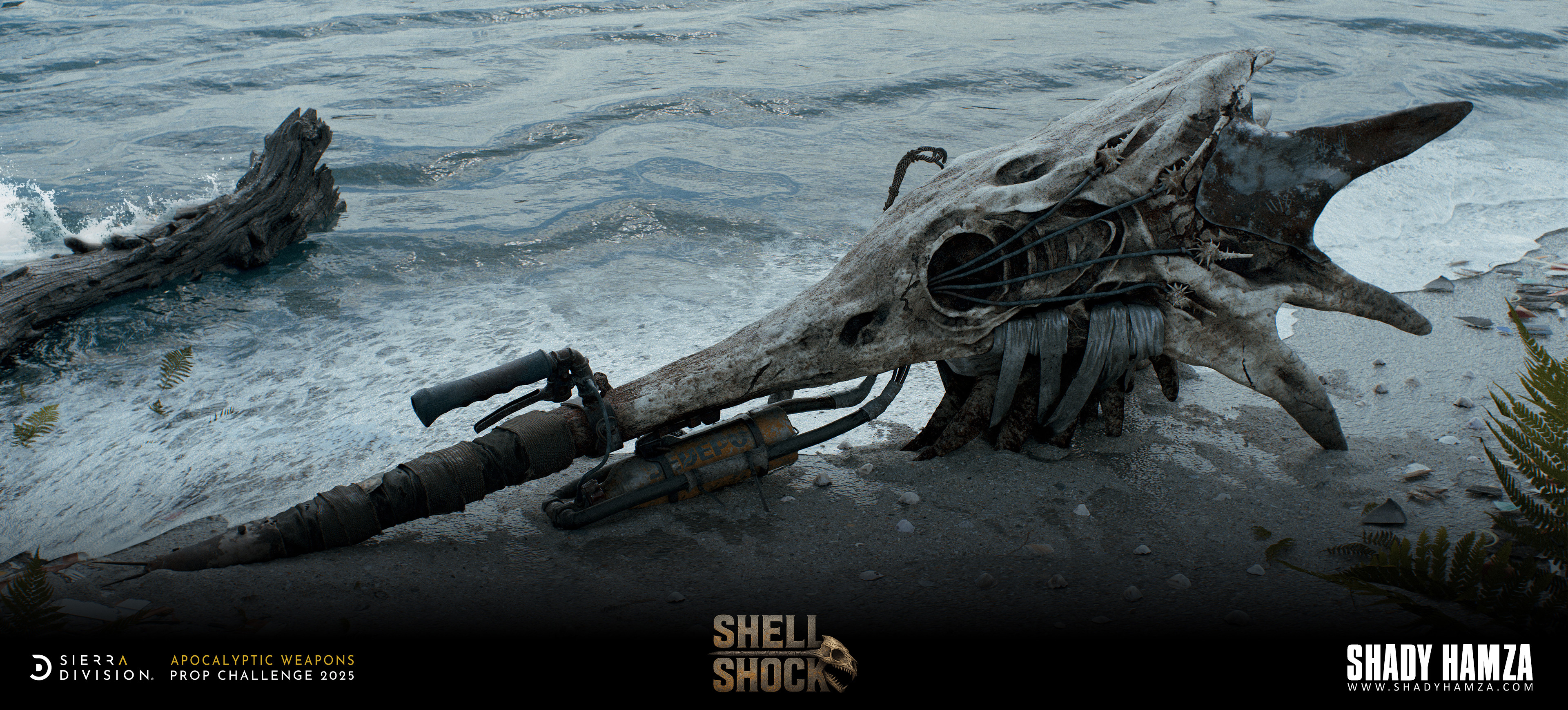
Overall Analysis: By presenting these two variations, the final renders not only showcase the weapon’s detailed design but also articulate its narrative context one that oscillates between quiet ruin and stark, dramatic resurgence. The overcast version deepens the sense of a world slowly reclaimed by nature, while the sunny render injects energy and highlights the inherent brutality and craftsmanship of the weapon. Together, they emphasize the duality of a post-apocalyptic relic: at once a mournful reminder of past conflicts and a striking artifact poised for potential future confrontation.